
How to Stop a Dog From Jumping on People (5 Steps That Work)
My first dog greeted my grandmother by hitting her in the thighs at full speed. Grandma laughed, patted his head, and said “oh, he’s just happy.” She was right. He was happy. He also did it to the UPS guy, my neighbor’s toddler, and a very nice man who came to read the gas meter and left with muddy handprints on his jacket. If you’re searching for how to stop a dog from jumping on people, I’m guessing you’ve got a story like that too.
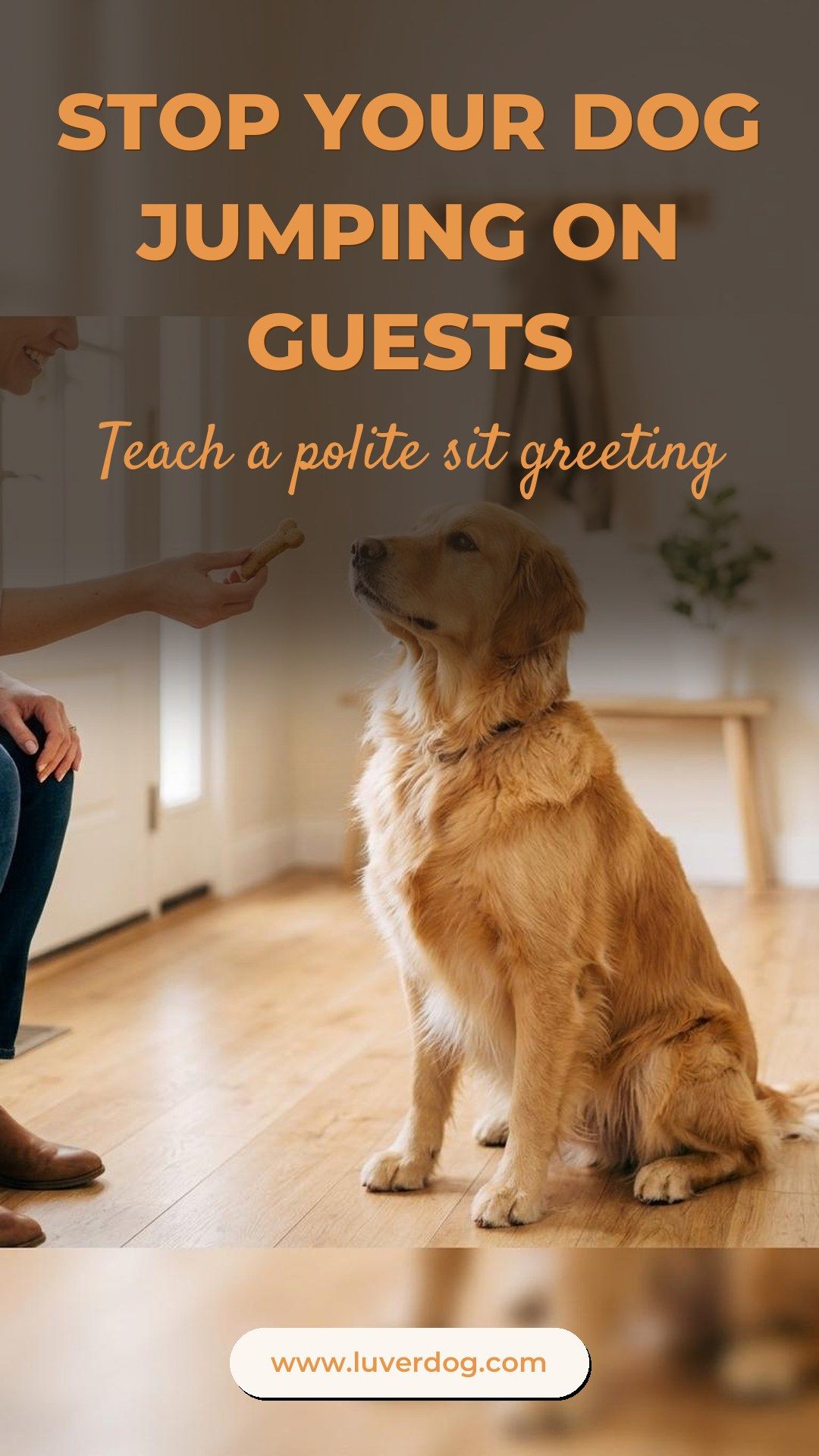
The short version: dogs jump because it works. It gets them close to your face, and it gets them attention, and attention is a paycheck. So the plan is to make jumping pay nothing, make four paws on the floor pay very well, and keep your dog from practicing on guests until the new habit sticks. Not complicated. Just not easy, mostly because the hard part is training the humans.
Why do dogs jump on people?
If you’ve wondered why do dogs jump on people, the boring answer is that it’s a greeting. The AKC calls jumping a natural canine behavior, a way for dogs to say hello face to face, the way they’d greet each other. VCA adds that a dog has to look way up to engage with a person, so jumping brings the face within reach. Some dogs also jump when they’re overstimulated or a little anxious.
Then there’s the part that’s on us. The AKC says attention is one of the most rewarding things a dog can get, so anything we do in response counts. Humane World for Animals points out that a fuzzy puppy is “just too cute to resist,” which is exactly how it starts. Think about what you do when a dog jumps on you:
- You pet them. (Reward.)
- You say “off!” or “no!” (Attention, so reward.)
- You push them away. (VCA says even negative attention can be rewarding.) The AKC notes pushing can feel like a wrestling game to some dogs.
- You look right at them and laugh. (Reward, and a good one.)
Every one of those tells your dog the jump worked. Which is why I think of jumping as a learned attention habit more than a “bad dog” problem. We trained it. Mostly by accident, and mostly because we love them.
The good news is that anything we trained by accident, we can untrain on purpose.
Step 1: What do I do the instant my dog jumps?
Take everything away. All of it.
This is the whole foundation of every other step.
- Stop touching. No pushing, no grabbing paws, no gentle “down, buddy” shove.
- Stop talking. Not even a calm “off.” Words are attention.
- Stop looking. Eye contact counts. Look at the ceiling, the wall, your phone, anywhere.
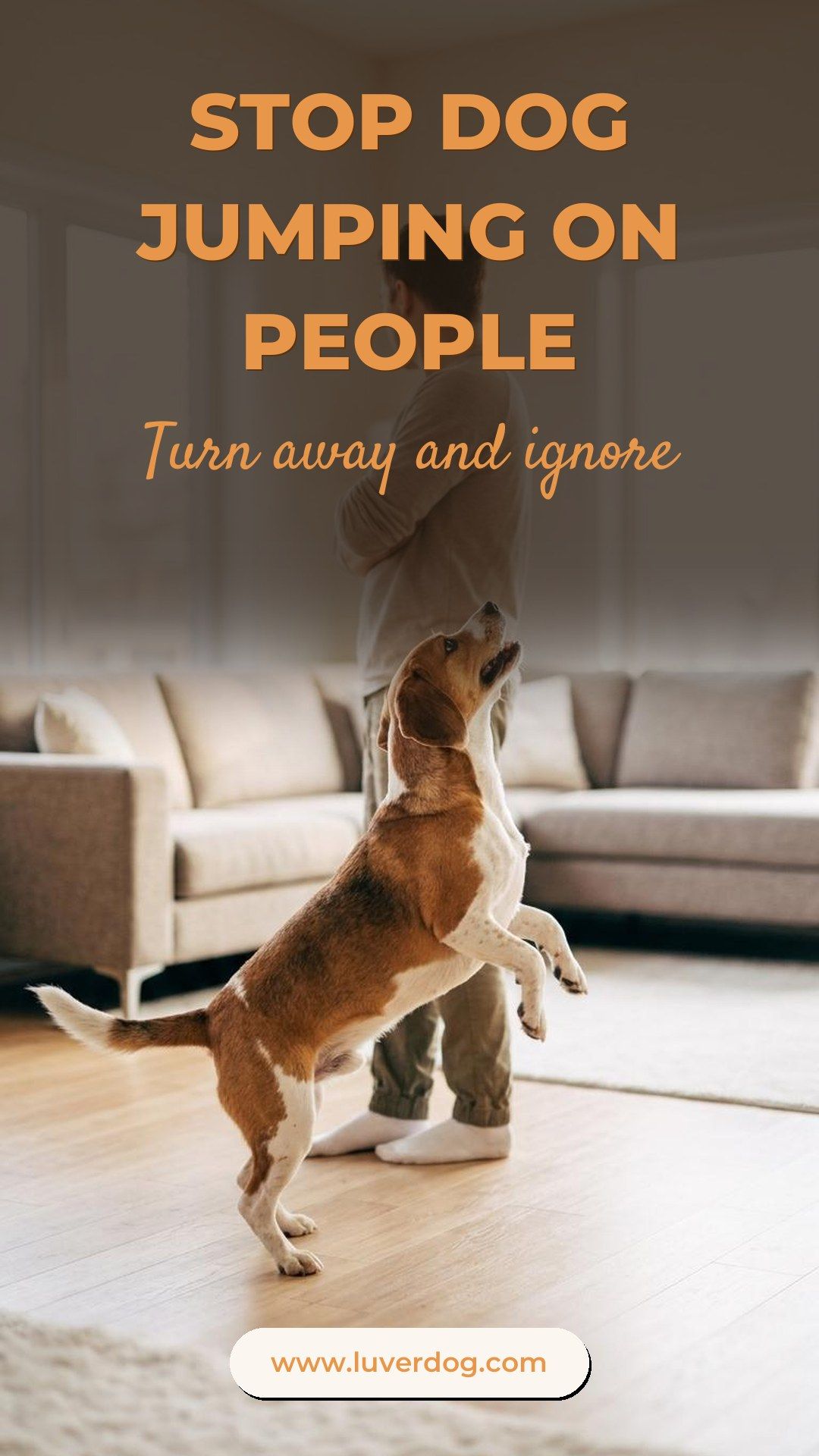
- Turn your body away. Fold your arms across your chest if it helps keep your hands out of it, and rotate so your back is to the dog. The AKC and Humane World both describe turning away from a jumping dog, and Humane World says to pet only when all four paws are on the floor.
- Pay for four on the floor. The second all four feet touch the ground, turn back, and calmly say “yes” or “good” and give a treat or a pet. Then the very next jump? Turn away again.
The first few days feel ridiculous. My dog jumped, I turned, he ran around to the other side and jumped again, I turned again. I must have spun in circles a dozen times in the kitchen. If you’re picturing a trained-dog-walking-in-a-zen-garden outcome on day one, don’t. Expect it to get worse before it gets better. (Trainers call this an extinction burst, which is a fancy name for “your dog is trying harder because the old trick stopped paying out.”) Stay boring. It passes.
Step 2: How do I teach my dog to sit instead of jump?
Ignoring a behavior only tells your dog what doesn’t work. You also need to tell them what does. A dog can’t sit and jump at the same time, and Humane World puts it just like that: they can’t sit and jump up at the same time. The AKC likes sit too, and adds that “sit” is an easier rule for a dog to follow than “don’t jump,” because it gives the dog something to do.
If you want to teach dog four on the floor first, VCA suggests that order: get reliable four-on-the-floor greetings, then ask for a sit and reward it, and eventually “sit” as the dog approaches becomes the new hello. Here’s the version that worked for me.
- Start with zero excitement. Practice in the hallway or the kitchen when your dog is calm, not the second you walk in the door covered in grocery bags.
- Ask for sit before the jump, not after. Walk toward your dog, say “sit” once, and reward the instant the rear hits the floor.
- Add a little drama. Walk in and out of the room. Jog toward them. Clap. Every time, ask for the sit and pay for it. You’re building the habit under rising excitement, in small steps.
- If they pop up, turn away, count to five, try again.
- Move the practice to the real thing: the front door. Reward with a treat from your pocket or from a jar on the shelf by the door.
Keep treats by the door. A little container on a shelf by the entryway took my success rate from “sometimes” to “most days,” purely because I had no excuse.
One honest caveat: some dogs, especially bouncy herding breeds and Labs, can’t hold a sit when they’re wild with joy. If that’s yours, make the goal four on the floor, not a perfect sit. A calm greeting your dog can really do beats a perfect one they can’t.
Step 3: How do I get everyone on the same page?
This is where most people’s training falls apart, and it isn’t the dog’s fault.
You can be perfect. If your dad pets the dog every time he jumps, you’ve got a dog who jumps when Dad’s around. VCA is blunt about it: consistency is the key, and rewarding jumping only sometimes, or only with some people, can make the behavior stronger. It turns your dog into a slot machine player. Sometimes it pays, so keep pulling the lever.
A few things that help.
- Hold a five-minute family meeting. VCA actually recommends this. Say the rule out loud: no touching, no talking, no eye contact until paws are down.
- Pick one cue. Everyone says “sit” (not “sit down,” not “off,” not “get down”). One word.
- Brief the people who show up often. Neighbors, the dog walker, grandma. A text works fine: “We’re working on jumping. Please ignore him until he sits.”
- Tell strangers on walks, politely, that you’re training. Most people are happy to help, and a few will say “oh, I don’t mind.” Smile and say you do.
The AKC points out that visitors don’t know your rules, so you have to tell them. Humane World agrees: if someone encourages the jump, you can politely decline. That second one took me years to get comfortable with. It felt rude. It isn’t, it’s training.
Step 4: How do I stop a dog jumping on guests?
Guests are the hardest test, because they show up with high-pitched voices and open arms, which is basically a jumping invitation. Practice at the door is also the fastest way to undo a week of good work.
So, for the training period, don’t rely on willpower. Use management so your dog physically can’t rehearse. The AKC suggests a dog gate at the entranceway, a leash when guests arrive, or sending the dog to a mat or crate if they’ve got a solid “go to your place” cue. VCA sums up why it matters: management keeps your dog from rehearsing the jump while the training takes hold.
Here’s the setup that works at my place.
- Before the knock. Leash on, treats in your pocket, dog on a mat or behind a baby gate in the hallway.
- Open the door with the dog out of reach. Greet your guest first. Dog stays calm, or goes to the mat.
- Let the dog say hello only when they’re sitting or standing with four paws down. The guest should hold their hands still and ignore the dog if they jump.
- Toss a treat away from the door. The AKC suggests keeping toys and treats by the front door so the dog has something to do while guests walk in. A scatter of kibble on the floor works as a decoy.
- If it falls apart, calmly put the dog back behind the gate for a minute. Not as a punishment. As a reset.
And what about jumping on you versus on guests? They’re really two different skills. Your dog may nail the sit for you in the kitchen and still launch at your cousin Dave. That’s normal. Dogs don’t generalize well (“sit” for you at the sink isn’t “sit” for a stranger at the door), so practice with a few different friendly helpers, one at a time. Dave can be your first volunteer. He owes you one.
Step 5: What should I never do to stop a dog jumping?
You’ll hear old advice online. Some of it is awful. Skip all of this.
- Kneeing the dog in the chest. It can hurt them, and it can scare them. It also often reads as attention, and some dogs treat it as part of the game. VCA warns that startling a dog with loud noises or sprays can make them link the discomfort to the person, and become wary of visitors or family.
- Stepping on their back feet or grabbing their paws. Same problem. The AKC lists yelling or grabbing paws as attention that still gives the dog a payoff, and it’s a good way to injure a toe.
- Yelling or spraying water. VCA says loud noises and water sprays can cause fear, and the dog may connect it with the person. Now you’ve got a dog who jumps and is also nervous, which helps no one.
- Pushing the dog away. To a lot of dogs, a shove is a wrestling invitation. You just rewarded the jump with a game.
- Punishing without teaching an alternative. VCA says that stopping a behavior without carefully teaching replacement behaviors creates frustration. That’s why steps 1 and 2 go together.
I’ve done at least two of these in the past, back when I didn’t know better. Didn’t work. Made my dog a bit weirder about greetings, if anything.

Is it different for puppies and adult dogs?
Yes, a little.
Puppies are easier, because the habit hasn’t had years to set. They’re also the hardest to resist, because a ten-week-old Lab jumping on your knees is adorable. Humane World warns that cute puppy behavior turns into a real nuisance as the dog grows, and says to be consistent even if you’re okay with it now. My rule is simple: if I don’t want a 70-pound dog doing it, I don’t let the 12-pound version do it. Start the four-paws rule on day one, keep sessions short, and keep greetings low-key.
Adult dogs take longer. A dog who’s been jumping for four years has four years of getting paid for it. You’re not breaking a habit, you’re outbidding one. Be patient, expect weeks and not days, and expect setbacks when excitement is high. Also expect to repeat the training whenever there’s a big change like holidays or a new roommate.
Dogs who are wound up in general are harder, too. If your dog is a zoomies-and-spinning type, my post on why dogs get the zoomies might explain some of that explosive energy. Burning off some of it before guests arrive, with a sniffy walk or a game of fetch, makes the sit a lot more doable.
What if my dog jumps because of boredom or demands?
Some jumping isn’t hello. It’s “play with me” or “I’m bored.” If your dog jumps on you at the sink at 5 p.m. every day, ask what they need. The same logic applies to demand barking, and my guide on how to stop a dog from barking at everything covers the same “stop paying for the demand” idea. A dog who gets enough exercise and chewing time just has less need to climb your torso. (Same story with my post on how to stop a dog from digging holes: a bored dog invents jobs.)
When should I talk to a trainer or behaviorist?
Excited jumping is annoying. It isn’t aggression. But I’m not a trainer or a vet, so here’s where I’d stop and call someone qualified.
- Jumping comes with growling, snapping, lip curling, or a stiff, frozen body. That’s not a greeting, and it isn’t something to fix with a turn-and-ignore plan. Call your vet and ask for a referral to a certified trainer or a veterinary behaviorist.
- Your dog jumps and seems anxious, trembling, or panicked around visitors.
- Your dog has hurt someone, like knocking over a child or an elderly relative, and you can’t manage the setup safely.
- You’ve been consistent for a couple of months and it isn’t improving. A good trainer can watch you do it and spot the one thing you’re missing.
- Jumping started suddenly in an older dog. Talk to your vet, because a change in behavior can have a medical reason.
Look for a trainer who uses reward-based methods. If anyone tells you to use a shock collar, a prong collar, or “dominance,” keep looking.
Slow, boring, and worth it
Stopping jumping comes down to a few boring rules: no attention for paws up, a lot of attention for paws down, a sit as the new greeting, everyone playing by the same rules, and a gate or leash so your dog can’t practice at the door. It takes weeks, sometimes longer, and some days it will feel like nothing is working.
It’s worth it though. Someday your dog will trot up to a guest, sit, and look up at them with that “pet me, please” face. My old boy did it for my grandmother, years after the thigh-punching days. She cried a little. So did I.
References
- AKC — How to Stop Your Dog From Jumping Up on People
- VCA Animal Hospitals — Why Does My Dog Jump Up? (Greeting Behavior)
- Humane World for Animals — How to Stop Your Dog From Jumping


Comments
Post a Comment