
Why Do Dogs Get the Zoomies? (And Are They Normal?)
It’s 9:40 PM. Your dog has been a lump on the couch all evening, and then, with zero warning, she’s gone. Ears flying, loose and wiggly, tearing laps around the coffee table like the floor just turned to lava. You stand there holding your tea, wondering whether to laugh or call someone. Laugh, almost always.

So, why do dogs get the zoomies? They’re short, wild bursts of pent-up energy or excitement, and they’re a completely ordinary part of being a dog. Vets and trainers call them FRAPs, short for Frenetic Random Activity Periods. The AKC calls zoomies generally harmless. If you’ve been asking yourself “are zoomies normal?”, the short answer is yes. The longer answer covers what sets them off, why they love the evening, when to pay closer attention, and how to keep a zooming dog from wrecking your shins or her own legs.
I’ve lived with zoomers for years. One of mine does a full bath-time sprint every single time, soaking wet, straight onto the bed I just made. I’ve stopped taking it personally. Mostly.
What are dog zoomies, exactly?
If you’re typing “what are dog zoomies” into a search bar because you just watched your dog go feral for two minutes, here’s the plain version. A zoomie is a sudden burst of frantic, repetitive activity: sprinting in circles, skidding around corners, spinning, dropping into a play bow, then launching off again.
If you’ve gone down a late-night search rabbit hole for “frap dogs frenetic random activity,” you’ve probably seen the term FRAP everywhere. The AKC notes that zoomies are also called “frapping”, from that acronym.
What surprises most people is that nobody has pinned down one single cause. Cornell’s Riney Canine Health Center puts it bluntly: there is no known specific cause of FRAPs in dogs. The leading idea is that it’s a way to release pent-up energy or let off stress. That’s an idea, not a proven fact, and I’d rather tell you that than pretend otherwise.
Why do dogs get the zoomies? The usual triggers
Different dogs, different buttons. These are the ones I see over and over, and the ones the vet sources back up.
- Pent-up energy, the classic one. A dog who’s been crated, cooped up, or short on exercise all day gets the chance to run, and out it all comes. The AKC describes puppies who’ve been confined or haven’t had much chance to exercise zooming once they finally get loose.
- Excitement and play. Your friend comes over. You pick up the ball. You walk in the door after work. Cornell lists coming home, play, and something exciting happening among the common triggers.
- Bath time, the post-bath mad dash. The AKC points to stress release here, noting dogs may zoom after a stressful event like a bath. Mine takes a towel to the face, shakes, and goes off like a firework.
- After pooping. Weird, but real. Cornell lists zooming after defecating as a trigger. Nobody can tell you why. I just assume it’s relief.
- Overstimulation during training. Cornell lists overstimulation during training as a trigger. If your dog melts down halfway through a session, that’s a sign to end the lesson on an easy win.
- Tension relief. A tough vet visit, a long car ride, a scary thunderstorm that finally ended. In my experience, some dogs shake off that stress by running it out, which lines up with the leading idea that zoomies help release pent-up energy or stress.
- A wide-open space. Cornell notes a large open space on its own can set off a zoomie. Take a dog to an empty field or beach and watch.
Some owners even learn how to start one on purpose, with a certain way of playing or a particular noise. I can set mine off by crouching down and clapping twice. Not a scientific method. Works every time.

When are zoomies most common?
Here’s where patterns help. If you can predict the zoomies, you can plan around them.
- Puppies and young dogs. Cornell says FRAPs are most common in puppies and young dogs. The AKC adds that the frequency tends to drop as a dog’s energy declines with age. Adult dogs still do it, just less often, and some keep doing it once in a while for their whole lives.
- Dog zoomies at night. The “witching hour” is real in my house. The AKC says zoomies happen quite often at night, especially after a day of confinement or limited exercise. Cornell also lists late in the evening as a common time. Think about it from the dog’s side: you’ve been away, the day was quiet, and now the house is finally lively and the energy has nowhere else to go.
- After a bath. See above. Towel, then chaos.
- After being cooped up. Rainy week, no long walks, a day in the crate. You can nearly set your watch by what happens when the door opens.
- Right after a big emotional moment. Reunion, party, visitors leaving. Some dogs need to physically process it.
Are zoomies normal, or is something wrong?
For the vast majority of dogs, they’re completely normal. Most zoomies are a sign of a healthy dog with energy to spare and a good mood.
That said, a few things are worth watching. I’m not a vet, so treat this as an owner’s checklist, not a diagnosis.
- They’re constant. The AKC warns that if your dog is frapping all the time, it could be something more serious, such as obsessive behavior or high stress. The same source says very frequent zoomies more often point to not enough exercise. If it feels compulsive rather than playful, talk to your vet or a qualified trainer or behaviorist.
- Your dog looks scared or in pain. Cornell says if a dog seems in pain, frightened or anxious during an episode, see your vet to find out why. A happy zoomie looks loose and wiggly, often with a play bow. A frightened dog looks tense, with wide eyes, a tightly tucked tail and ears folded back.
- Your dog keeps hurting herself. Slipping, crashing into furniture, limping afterward. The zoomies themselves aren’t the problem. The floor is. If she’s limping after one, that’s a vet call, not a wait-and-see.
- It never lets up. If your dog can’t settle even after the burst ends, mention it to your vet.
There’s no long list of scary symptoms here, because for the vast majority of dogs there isn’t one.
How do you manage zoomies safely?
You can’t switch them off, and you wouldn’t want to. But you can make them less of a hazard.
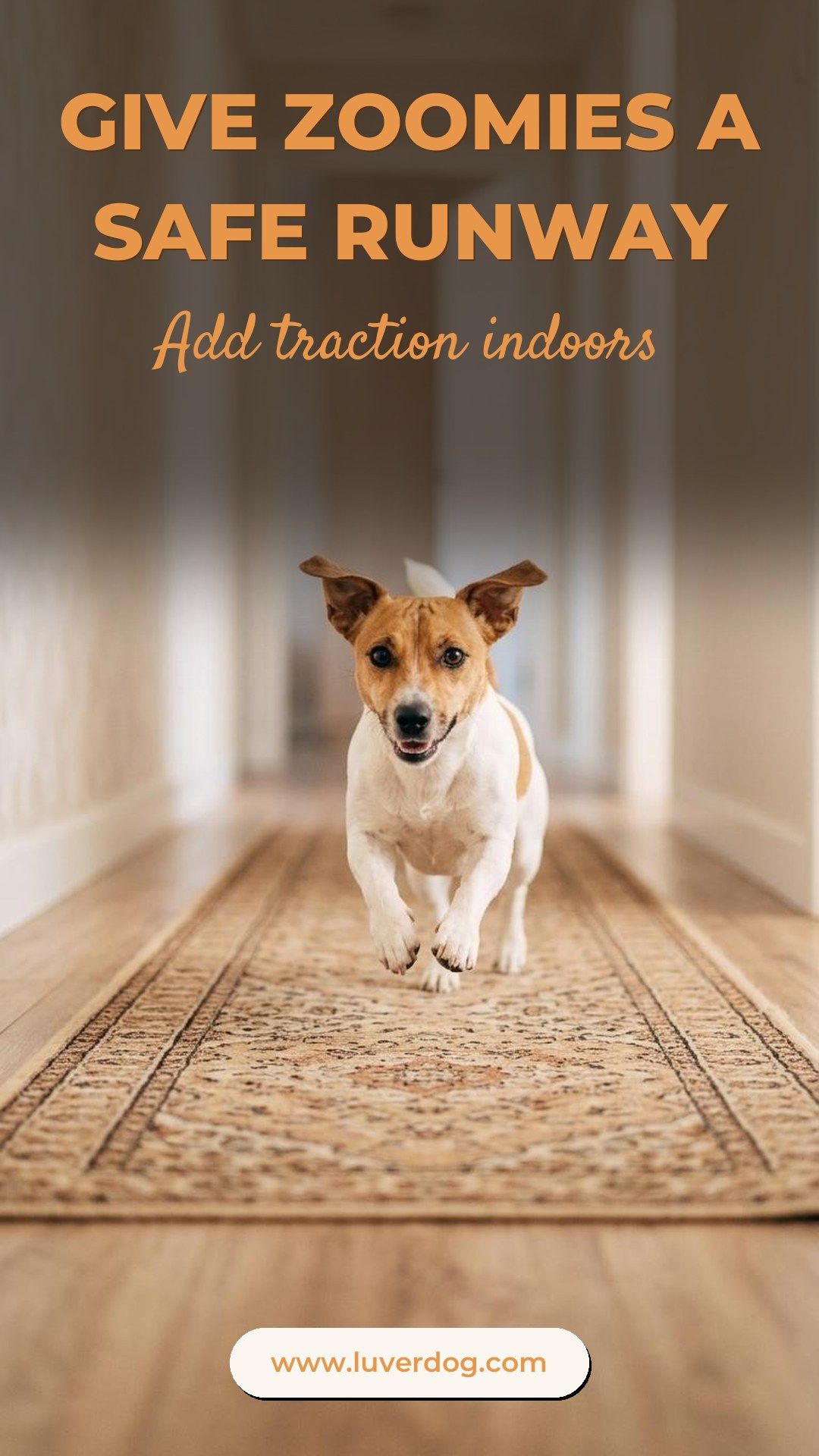
- Give the zoom a safe runway. Cornell says to keep a zooming dog away from stairs, slippery floors, obstacles and the road. Move the wobbly lamp. Shut the stair gate. If you’re outside, only let a zooming dog loose somewhere fully enclosed. Cornell says grass is the best footing, with carpet and packed dirt also fine, while hard floors, ice, gravel and sand raise the risk of falls.
- Add traction indoors. My hallway is wood laminate, and I learned about it the hard way when my dog skated into the wall like a hockey puck. Rugs and runners along her usual racing line fixed it. The AKC also suggests steering zoomies toward a carpeted area when you can. Cheap, boring, effective.
- Exercise more regularly. Since pent-up energy is the big driver, a longer walk or a game of fetch before the evening rush can take the edge off. I’m not going to promise it ends the zoomies. In my experience it mostly changes how wound-up she gets.
- Don’t chase her. Everyone’s instinct is to run after the dog. Don’t. In my experience chasing just makes things more exciting and raises the odds of a collision or a fall. I stand still, or better, move away so she chases me in a safe direction, then call it down.
- Let it run its course. Zoomies are brief, so most of the time you don’t need to do anything but protect the furniture and enjoy the show.
- Skip hard jumps for young pups. The AKC advises avoiding strenuous exercise or jumping that could harm growing bones. A puppy tearing around on carpet is fine. A puppy launching off the sofa repeatedly isn’t.
What about nighttime zoomies and sleep?
Evening bursts can be funny until it’s 11 PM and you want bed.
- Move the exercise earlier. A proper walk late in the afternoon, not just a pee break. Add a sniffy walk, a puzzle toy or a short training session. What finally worked for my evening zoomer was shifting her main walk to about 5 PM instead of after dinner; by 9 PM she’s run the tank down and the laps are shorter.
- Keep the wind-down calm. Dim lights, quiet voices, a chew. If you’re curious how light plays into your dog’s rest, here’s my post on whether light affects your dog’s sleep.
- Got a crate-trained puppy going wild at lights-out? That’s usually energy that didn’t get an outlet during the day. I wrote about dogs barking in the crate at night, and a lot of the same tricks apply.
Other quirks I’ve covered, in case you’re deep into dog weirdness today: why dogs eat grass is another one that looks alarming and mostly isn’t.
When should you talk to your vet?
Calm and short, because this part matters.
- Your dog zooms constantly, or it looks compulsive.
- She seems scared, in pain or anxious while it’s happening. Cornell’s advice is to get a vet to look into why.
- She’s limping or yelping after a burst.
- The behavior changed suddenly, and you can’t explain why.
- You’re not sure whether it’s play or something else.
A vet can look at the whole picture. A qualified trainer or behaviorist can help if the cause looks more like stress or boredom. I’m not either, and I won’t guess.
Just let them zoom
Zoomies are one of the best things about living with a dog. They’re silly, a bit unhinged, and a free show. Keep the floor safe, keep the exercise regular, skip the chase, and enjoy it.
And if something about her zoomies ever feels off, trust that instinct and ask your vet. You know her better than anyone.
References
- AKC — What Are Zoomies?
- Cornell University College of Veterinary Medicine, Riney Canine Health Center — What Are Zoomies?


Comments
Post a Comment