
How to Stop a Dog From Barking at Everything: 5 Steps
How to Stop a Dog From Barking at Everything (5 Steps That Work)
The mail carrier. A leaf. The neighbor’s recycling bin. Once, memorably, a plastic bag doing a slow lap down the street at 6:40 on a Sunday morning. I’ve lived with a dog who treated all of it as a personal emergency, and if you’re searching for how to stop a dog from barking at everything, you’re probably running on about as little sleep as I was.
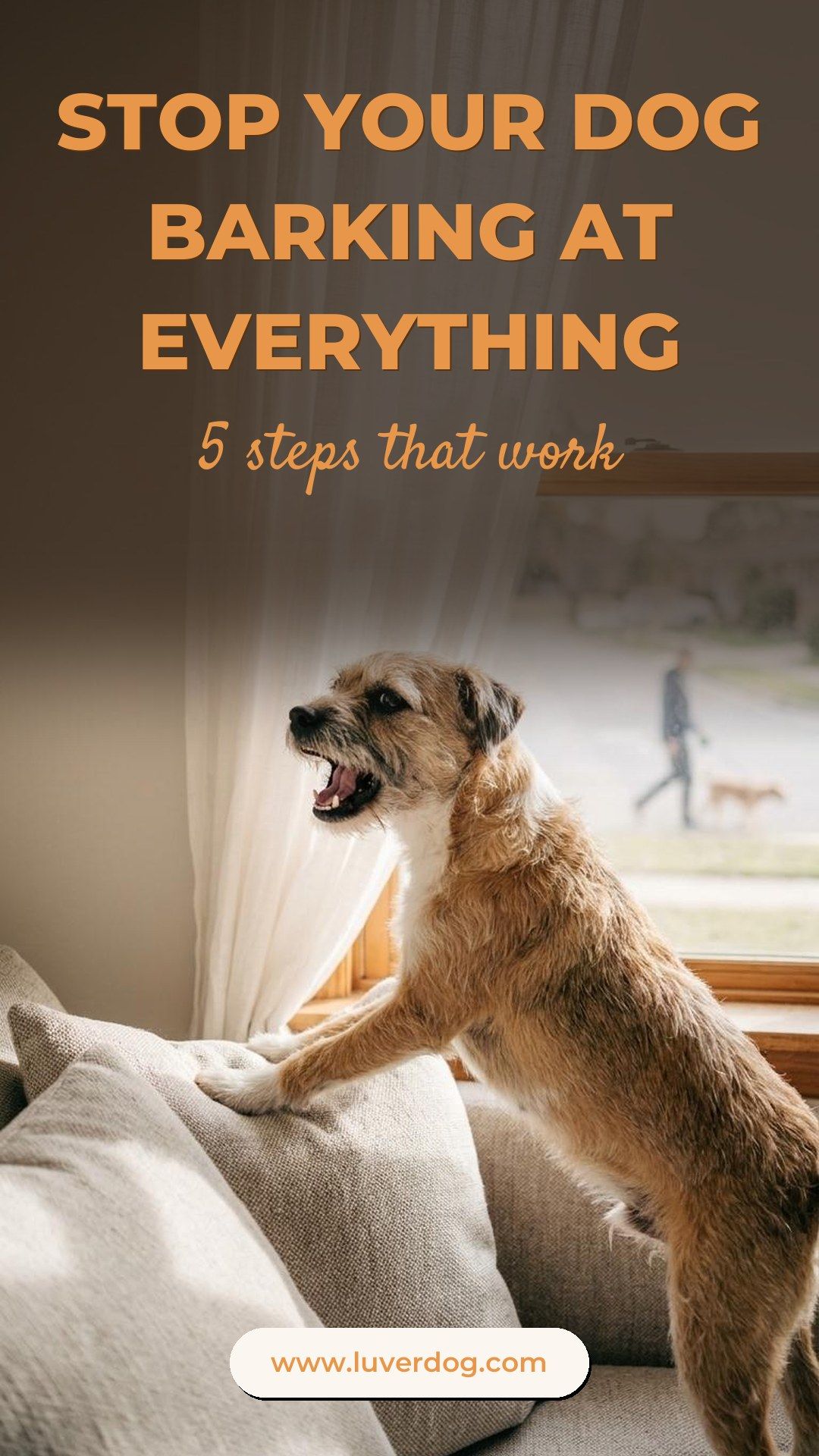
Here’s the short version. Barking at everything is almost never one problem. It’s a habit built on a reason, and the reason decides the fix. Block the view, teach a “quiet” cue, change how your dog feels about the trigger, burn off the extra energy, and stop rewarding the noise by accident. That’s the whole plan. It’s slow, though, and nobody tells you that part.
Why does my dog bark at everything?
Before you try anything, work out what kind of barking you’ve got. A dog who barks at the window for fun needs a different plan from a dog who barks because something truly scares them. VCA Animal Hospitals describes barking as a normal way dogs signal territory and alarm, and also as something that can come from frustration, anxiety, or demands for attention. Here’s how I tell them apart.
Alarm and alert barking. Sharp, fast, aimed at a specific thing: the doorbell, a car door, footsteps in the hallway. The body is stiff and forward, ears up. Once the thing goes away, the dog settles within a minute or two. My old girl did this every single time the delivery truck turned onto our road.
Territorial barking is the same engine with a bigger chip on its shoulder. It happens at the fence line, the front window, the gate. The dog is guarding turf, and the barking is working from their point of view, because the intruder always leaves. (The mail carrier does leave. Dog wins every day.)
Boredom barking. No obvious trigger. It’s repetitive, a bit monotone, often in the evening or when you’re busy. Dogs that were bred to work, like Border Collies and shepherds, are famous for this. A bored brain will invent a job, and “announce everything” is a job.
Attention-seeking barking is the one where your dog looks straight at you while barking. You can almost hear the sentence. VCA notes that this kind is often reinforced by owners giving in to their dog’s demands, which is a polite way of saying we taught them. If your dog also does the long, unblinking stare, my post on why dogs stare at you covers that side of it.
Anxiety or fear barking. This one looks different. The body is tense or pulling back, the tail may be tucked, the barking can be higher and more frantic, and the dog doesn’t calm down quickly. Same word, “barking,” completely different feeling underneath. This is the one where rushing in with a stern voice makes it worse.
Quick test: watch what happens right after. If the dog relaxes the second the trigger leaves, it’s probably alarm or territorial. If they look at you, it’s attention. If there’s no trigger at all, think boredom. If they can’t settle, think fear, and read the vet and behaviorist section near the bottom.
Step 1: How do I manage the triggers first?
Management comes before training. I know that’s boring. But every time your dog rehearses the barking, it gets better at it, so you want to cut the practice reps while you work on the real fix.
Block the sightline. Frosted window film (the cheap peel-and-stick kind, maybe $15 for a roll) lets light in but hides the street. Or close the blinds on the one window that sets everything off. VCA’s advice is to keep the dog away from doors and windows or cover the windows so they can’t see what’s outside. Boring, effective.
Mask the sound. A white noise machine or a fan near the door, or even a podcast, cuts down on the footsteps-in-the-hall barking. It won’t fix everything. It takes the edge off.
Manage the yard. If your dog is out there alone barking at joggers, the yard is the problem. Supervise, or bring them in. A solid fence panel at dog-eye level can stop the fence-line show, and a dog who isn’t patrolling can’t practice.
Remove the payoff. The dog barks, the scary thing leaves, and the dog learns that barking works. You can’t change what the postal worker does, but you can change what you do. More on that in step 5.
I’m not saying hide your dog from the world forever. Management is the scaffolding. It comes down later.
Step 2: How do I teach the “quiet” command?
This is the one everybody tries first and does slightly wrong. Timing is everything here.
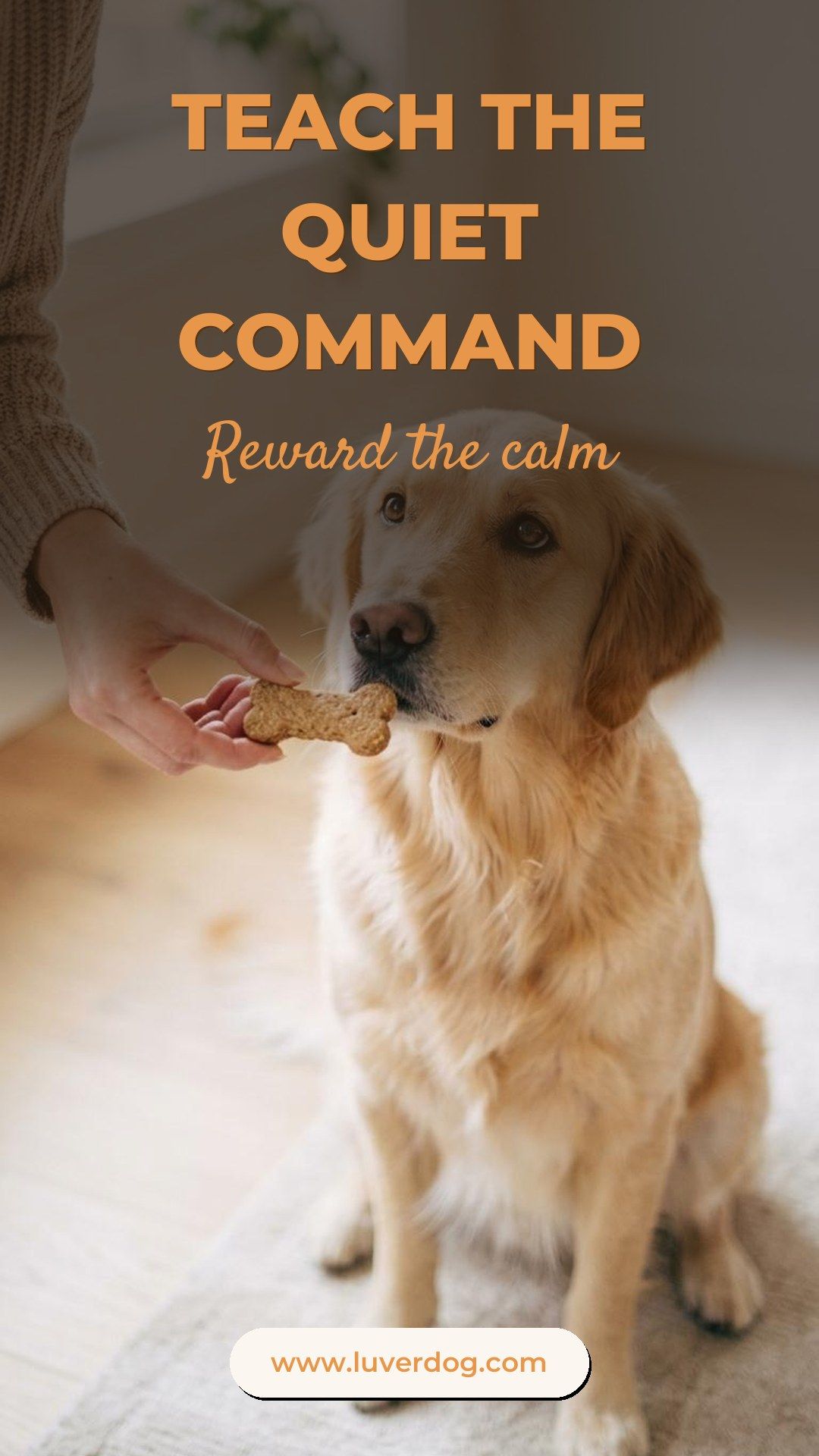
VCA calls training a dog to be quiet on cue an invaluable aid, and the key detail is that you should associate silence with the command and reward as soon as the barking stops. Not while the dog is still going. Not ten seconds later when you remember the treat.
Here’s how I do it.
Start with a calm trigger. Have a helper knock softly or press the doorbell, or just wait for the real thing. Let your dog give a couple of barks.
Mark the pause. The instant there’s a breath of silence (even one second), say “yes!” or click, and deliver a treat. You’re rewarding the quiet, not the bark.
Add the word once it’s reliable. When your dog is stopping on their own, say “quiet” in a calm voice right as the pause begins, then reward. Say it before the silence and it becomes background noise.
Stretch the gap slowly. One second, then three, then five. Don’t jump to thirty. If your dog starts barking again, you went too fast. Back up.
Some trainers also teach “speak” first, so the dog learns barking happens on cue, and quiet becomes the matching half. VCA mentions this as an option. I’ve done it both ways. It’s fun, and it can make “quiet” click faster for clever dogs, but it isn’t required.
Use something better than kibble. Small bits of chicken or cheese, because you’re competing with a squirrel.
Step 3: How do I stop the barking at the source?
“Quiet” manages the noise. Desensitization and counter-conditioning change the feeling, and that’s what makes the barking fade instead of just pausing.
The idea: show your dog the trigger at a distance where they notice it but don’t explode, then feed treats while they look at it. Over many repetitions, the scary-or-exciting thing starts predicting chicken. VCA describes the approach as starting at a distance and repeating the training with progressively more intense stimuli, and it warns that it can be slow. It really can.
Find the threshold. That’s the distance where your dog sees the trigger but can still take a treat. If they won’t eat, you’re too close.
Trigger appears, treat appears. Trigger leaves, treat stops. Keep it quick and cheerful, like a game show.
Move closer by small steps. Over days, not minutes. A fence-line trigger might go from 100 feet to 80. Not from 100 to 10.
Keep sessions short, five minutes or so, and end while your dog is still doing well.
Practice the doorbell the same way: a recorded doorbell, played quietly at first, with treats, then louder across weeks.
A slip is normal. If your dog goes over threshold and barks their head off, don’t scold, just calmly walk away from the trigger and try again tomorrow from farther back.
Step 4: Does my dog just need more exercise and brain work?
Sometimes the answer really is that simple. A dog with a full tank of energy and nothing to do will fill the quiet with noise.
VCA suggests increasing interactive play periods and exercise before you start bark control training, and the AKC says much the same: for boredom barking, giving your dog something to do may be the answer, and a tired dog is more likely to rest.
What worked for my guys:
- A real walk, not a potty lap. If you have a high-drive breed, my guide on how many times to walk a Border Collie gives a realistic picture of how much that can be.
- Ten minutes of nose work a day: scatter treats in the grass, or hide them around the room.
- A frozen stuffed Kong or a snuffle mat while you’re on a work call.
- Short training sessions. Five minutes of sit, down, and “touch” tires the brain faster than a long walk tires the legs.
Young dogs are the worst offenders, by the way. If yours is somewhere between one and three years old and barks at air, adolescent energy is a big piece of it, and most dogs do mellow with age and training. And if the barking mostly happens when you’re out, being left alone too long is worth a look.

Step 5: How do I stay consistent and not reward the barking?
This is where most of us fall down, me included.
Don’t feed the bark. If your dog barks at you for attention and you say “okay, okay, what?” or throw a toy, you’ve just paid them. VCA’s training tips are blunt: don’t give your dog any attention when they bark. Wait for quiet, then give them what they wanted.
Everyone in the house follows the same rules. If you ignore the barking and your partner lets the dog out the second it starts, you’ve set up a slot machine. Dogs love slot machines.
Reward the quiet constantly. Catch your dog being calm at the window and drop a treat. People forget this one. We only notice the dog when it’s loud.
Be patient. Weeks, not days. A dog who has barked at the window for four years isn’t undoing it in a weekend.
What should I NOT do to stop barking?
Two things, and I feel strongly about both.
Don’t yell. To your dog, you shouting “QUIET!” sounds like you’ve joined in. VCA says yelling may just add to the noise, anxiety and conflict, making the dog bark even more. I did this for about two weeks with my first dog and it was a perfect example of my own bad advice making things worse.
Don’t reach for a shock or spray collar. These devices work by making barking unpleasant, and they can suppress the sound without touching the reason the dog is barking. The American Veterinary Society of Animal Behavior (AVSAB) recommends only reward-based training, including for behavior problems, and says there is no role for aversive training in behavior modification plans. It lists electronic shock collars among the tools to avoid. It also says the fallout from aversive methods is well documented and includes increased anxiety, fear-related aggression, avoidance, and learned helplessness. So you might fix the barking and get a more anxious dog. Bad trade.
There’s a trust cost too. If your dog barks because they’re scared of strangers and a collar zaps them when a stranger shows up, what they learn is that strangers cause pain. The fear gets bigger, not smaller.
When should I call a vet or a certified behaviorist?
Barking at everything is usually a training problem. Sometimes it isn’t. Reach out to a professional if:
- The barking is sudden and out of character, especially in an older dog. Talk to your vet to rule out pain or other medical causes. VCA notes that medical problems can contribute to vocalization, particularly in older dogs.
- It comes with panic: destroying doors, drooling, pacing, or howling whenever you leave. That could be separation anxiety, and it needs a proper plan from your vet or a qualified behavior professional.
- It’s getting worse even though you’ve been consistent for several weeks.
- Your dog growls, lunges, or snaps when they bark at people or dogs.
I’m not a vet, and I can’t tell you what’s going on with your particular dog. A vet can check for medical causes, and a certified behavior consultant can build a plan around your dog. That’s what they’re for.
Quieter, not silent
Your dog will always bark sometimes. They’re dogs. The goal is a dog who barks twice, looks at you, and lets it go. Work out the reason, manage the triggers, reward the quiet, and give your dog plenty to do. Skip the yelling and the collars.
It took me longer than I wanted. But the first morning the plastic bag floated past and my dog just watched it go, I nearly cried into my coffee.
References
- VCA Animal Hospitals: Barking in Dogs
- VCA Animal Hospitals: Tips to Quiet Barking
- AKC: How to Stop a Dog From Barking
- AVSAB: Position Statement on Humane Dog Training (2021)


Comments
Post a Comment