
Why Does My Border Collie Try to Herd Everything? (And How to Redirect It)
Short answer: because movement is the on-switch. Your Border Collie doesn’t see a bicycle, a jogger, or your kid sprinting down the hallway. He sees something moving, and every cell in his body was bred to do something about that.
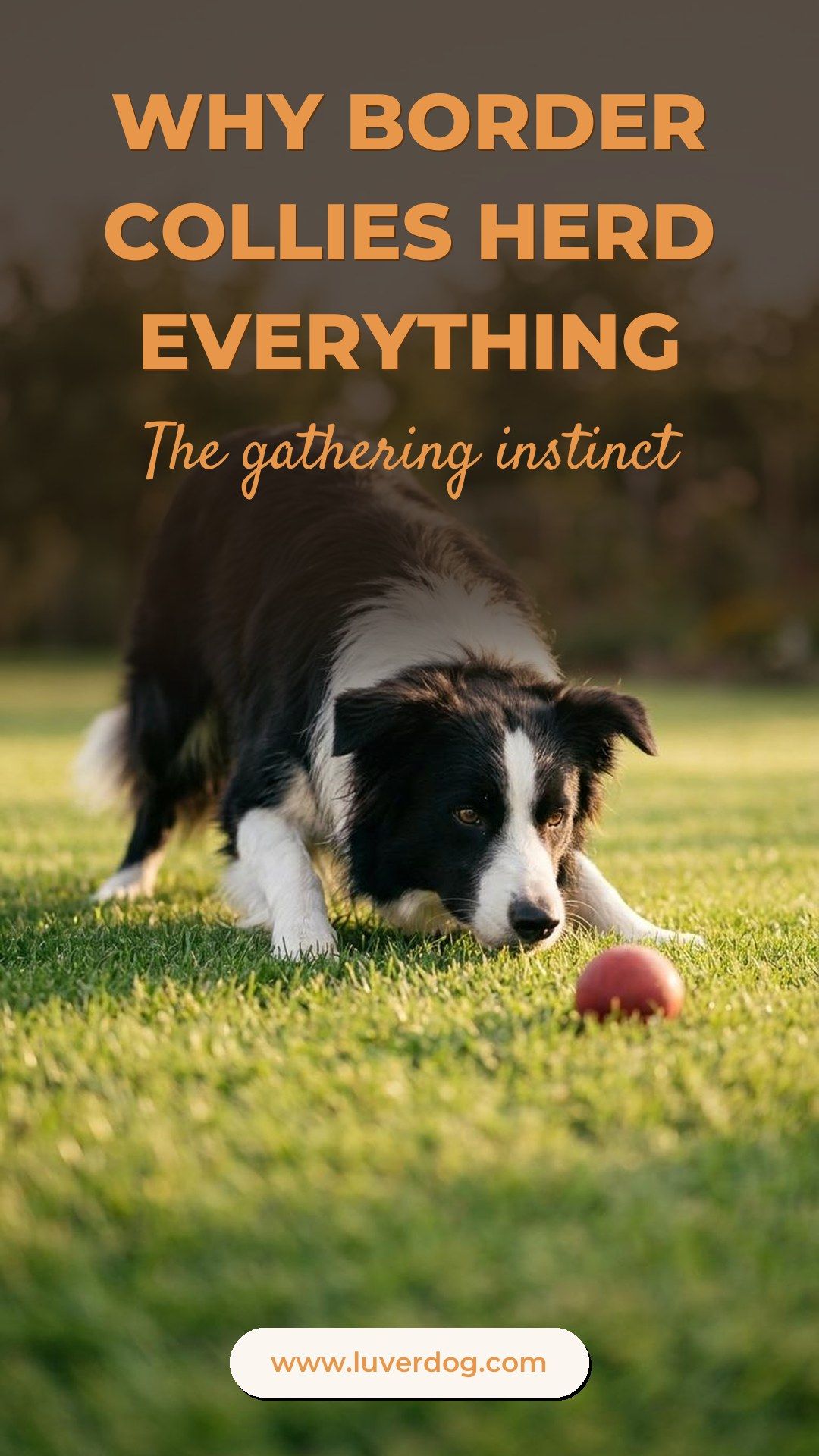
If you’re asking why your Border Collie tries to herd everything, you’ve probably watched him circle the vacuum, crouch at the garden fence while a skateboard rolls past, or sprint after a car like it owes him money. I’ve lived with that dog. Mine once rounded up a runaway shopping cart in a parking lot, and I’m not entirely sure he wasn’t proud of it.
I’m not a vet or a certified trainer, just an owner who’s had to learn this the slow way. This post is about the chase side of herding: what sets it off, why it’s so hard to switch off, and what actually helps. (The fixed stare is a separate thing, covered in why Border Collies stare. So is the ankle-biting, which has its own post on why Border Collies nip.)
Why does my Border Collie herd everything that moves?
Herding is a chopped-up version of a predator’s hunting sequence. According to the AKC, herding breeds inherited the early stages of that sequence (search, stalk, chase) and had the final grab-and-bite stages significantly subdued. How far down the sequence a dog goes varies by breed; in my experience Border Collies are a classic case of stopping around the chase. The AKC also points out that this is triggered by motion, not by a dog trying to get attention or misbehave.
That matches what I’ve seen. Nothing about my dog’s chasing was personal. A stationary child was boring. The same child running? Instant project.
Here’s what that looks like in daily life:
- Kids running and playing. The big one for families. Screaming and sprinting is the loudest “move this!” signal a dog can get.
- Bikes, joggers, skateboards, scooters. Fast, linear, predictable. Border Collies love predictable.
- Cars. The most dangerous version, and the one I take most seriously.
- Other pets. Cats, chickens, the neighbor’s beagle. Mine tried to organize a very patient old Labrador for months.
- Household objects. Vacuums, rolling balls, a Roomba, a toddler’s pull-toy. Anything that moves on its own can get “gathered.”
- Shadows, light reflections, and sprinklers. Not everyone’s dog does this, but some do.
If your dog goes past herding into something that looks like a compulsion, such as shadow-chasing he can’t be interrupted from, mention it to your vet. That’s a medical and behavior-pro question, not something I can diagnose from a blog chair.
Is herding behavior normal for a Border Collie?
Completely. It’s the whole reason the breed exists. I went deeper on why these dogs are so sharp in are Border Collies smart, and the herding wiring is the other half of that story: a brain built to watch, predict, and control motion.
What’s normal and what’s a problem are different questions, though.
- Normal: crouching, circling, running alongside a moving thing, and an excited “look at me, I’m working” energy.
- Worth acting on: chasing anything near a road, herding that scares or knocks over small kids, or a dog who can’t settle after the thing has gone.
- Worth a professional: a dog who doesn’t come off the chase when you call, or who seems frantic and stressed rather than excited. A qualified trainer or veterinary behaviorist can see things I can’t.
A bored Border Collie herds more. Everything gets worse when the brain has no job, and a long walk alone doesn’t cover it. More on that below.
Why is it so hard for him to stop?
Because chasing feels good to him, and every successful chase pays him. The car goes away. The kid squeals and runs. The bike speeds off. From his side, “I barked and it left” is a win, and wins get repeated.
The AKC makes a related point that I wish someone had told me sooner: if the kids run from a dog who’s nipping at their feet, that only keeps the behavior going. Reactions are fuel.
Two things make Border Collies particularly sticky about it:
- They’re fast learners, which cuts both ways. A dog this quick picks up bad habits in about three repetitions.
- Arousal builds. Each time he gets worked up, the next trigger fires faster. In my experience adolescence (roughly 8 months to 2 years) is when this is at its worst. If you’re in that stage, when Border Collies calm down is worth a read for the honest timeline.
What actually works to redirect herding in Border Collies?
The methods below are boring and repetitive, and that’s exactly why they work.
Teach “Watch me” and “Leave it” until they’re automatic. The AKC specifically recommends these as the cues to pull attention off moving objects. Start in your kitchen with no distractions, pay well, then slowly add movement. Build up to a ball rolling by, then a kid walking by, then a kid jogging.
Make him earn the exciting stuff with calm. Ask for a sit or down before fetch, before the door opens, before dinner. The AKC suggests this kind of self-control work before fetch or tug. It sounds dull. It’s the single skill that gives you an off switch.
Reward the thing you want near movement. If a kid is playing in the yard and your dog glances at them, then at you, jackpot. Treat, praise, repeat. You’re paying for calm looking instead of chasing.
Interrupt early. The best moment to redirect is the first crouch or the first hard look, not after he’s launched. Learn his tells. Mine drops his head and goes still about two seconds before the chase.
Teach a “go to your mat” or “place” cue. A dog who has somewhere to be is easier than a dog who has to guess. It’s my go-to for visitors, kids’ birthday parties, and anyone arriving on a scooter.
Train the recall like your dog’s life depends on it. Because near a road, it might. Do it on a long line first, in boring places, then somewhere harder.
For more on how trainable these dogs really are (and why that doesn’t mean easy), see are Border Collies easy to train.
How do I manage the environment so he stops rehearsing the chase?
This is the unglamorous half, and I’d argue it matters more than any cue. Every time he gets to chase, the chase gets stronger. The AKC says the same thing in plain terms: prevent your dog from practicing unwanted herding as much as possible while you teach basic obedience.
- Fence it, and make it solid. A chain-link fence with a road behind it is a movie trailer for your dog. Solid boards or a privacy screen at the busy corners can help a lot.
- Leash or long line near roads, every time. No exceptions, no “he’s good, he won’t.” A herding dog and a car is the one scenario I won’t gamble on.
- Don’t let the kids sprint around him unsupervised until the cues hold. Calm games with a dog on a mat nearby are a good start.
- Block the window. If he practices lunging at joggers through the glass, frosted film or a lower blind saves a lot of grief.
- Put the vacuum on a rule. Dog goes to place first, vacuum starts second.
- Use baby gates and breaks. Giving him a quiet room for 15 minutes isn’t mean. Over-aroused dogs need a reset.
What are good outlets for a Border Collie’s herding drive?
Suppressing the drive doesn’t work. You have to give it a legal place to go. The AKC lists herding sports, Treibball, flyball, disc dog, and agility as ways to redirect the instinct.
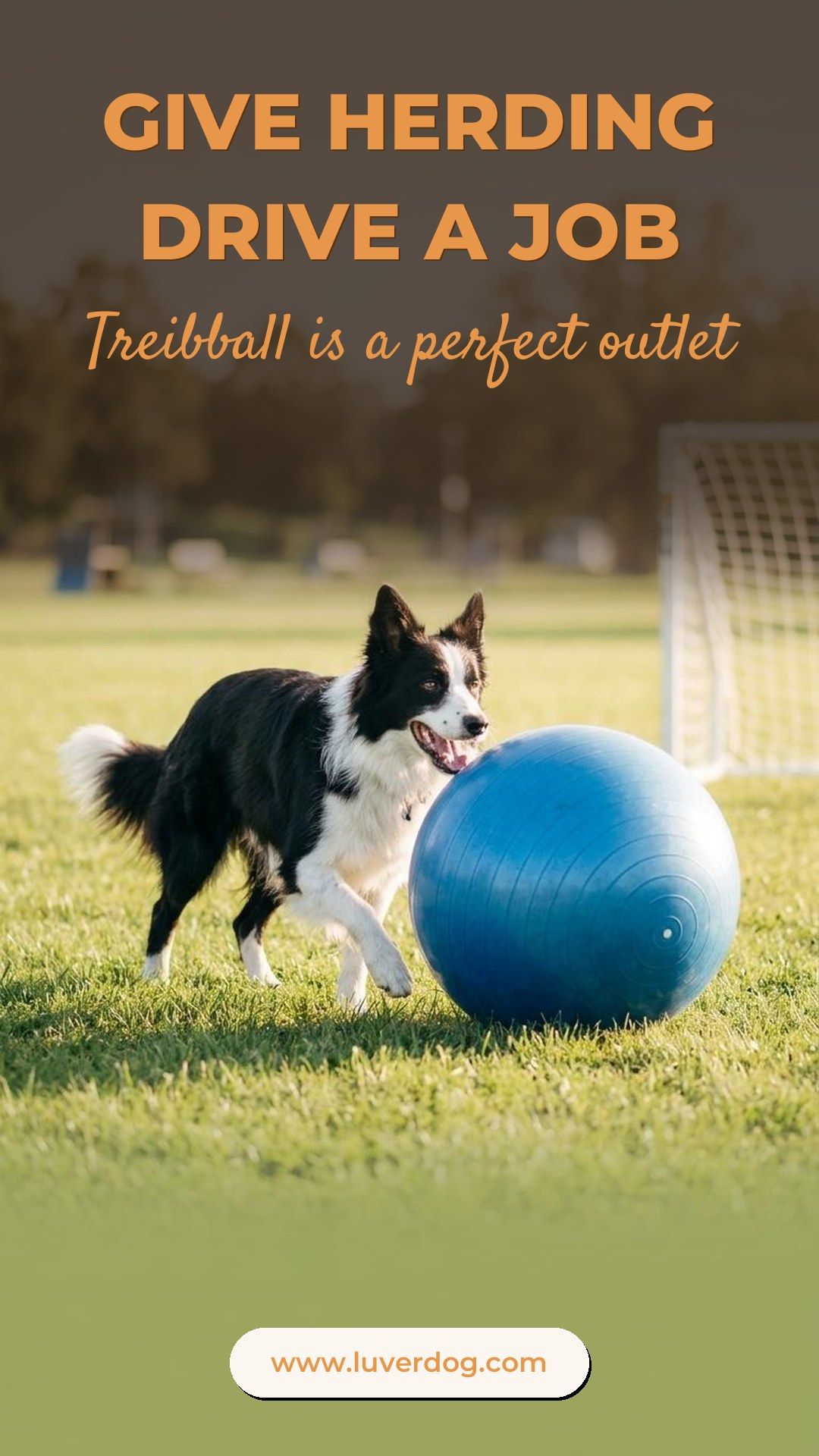
- Treibball (urban herding). The dog pushes big exercise balls into a goal with his nose and chest. It was designed to give herding dogs a herding-style job where there are no sheep, and the AKC has a Treibball overview if you want to see how it works. You can start at home with a large ball and a lot of patience.
- Fetch with rules. Not endless fetch, which just winds a Border Collie up like a toy. Sit, release, retrieve, drop, wait. The rules are the exercise.
- Flyball and disc. Fast, structured, and they burn off the chase energy in a form that rewards you for it.
- Agility. Good for brain and body. It gives him a task that involves speed and direction.
- Real herding lessons. If there’s an instinct-testing or herding class near you, a few sessions can be eye-opening. Some owners tell me their dogs settle better at home afterward. Mine did.
- Scent games and puzzle work. Dull compared with sprinting, but a tired brain beats a tired body. Hide treats, set up search games. Twenty minutes of sniffing wears mine out more than a 40-minute walk.
A caution I learned the hard way: more exercise alone can make him fitter and more demanding. Mix hard running with thinking games and, crucially, a settle practice at the end. A Border Collie who’s never taught to switch off will never learn to switch off.
How do I teach an “off switch”?
This is the skill people skip, and the one that changes everything.
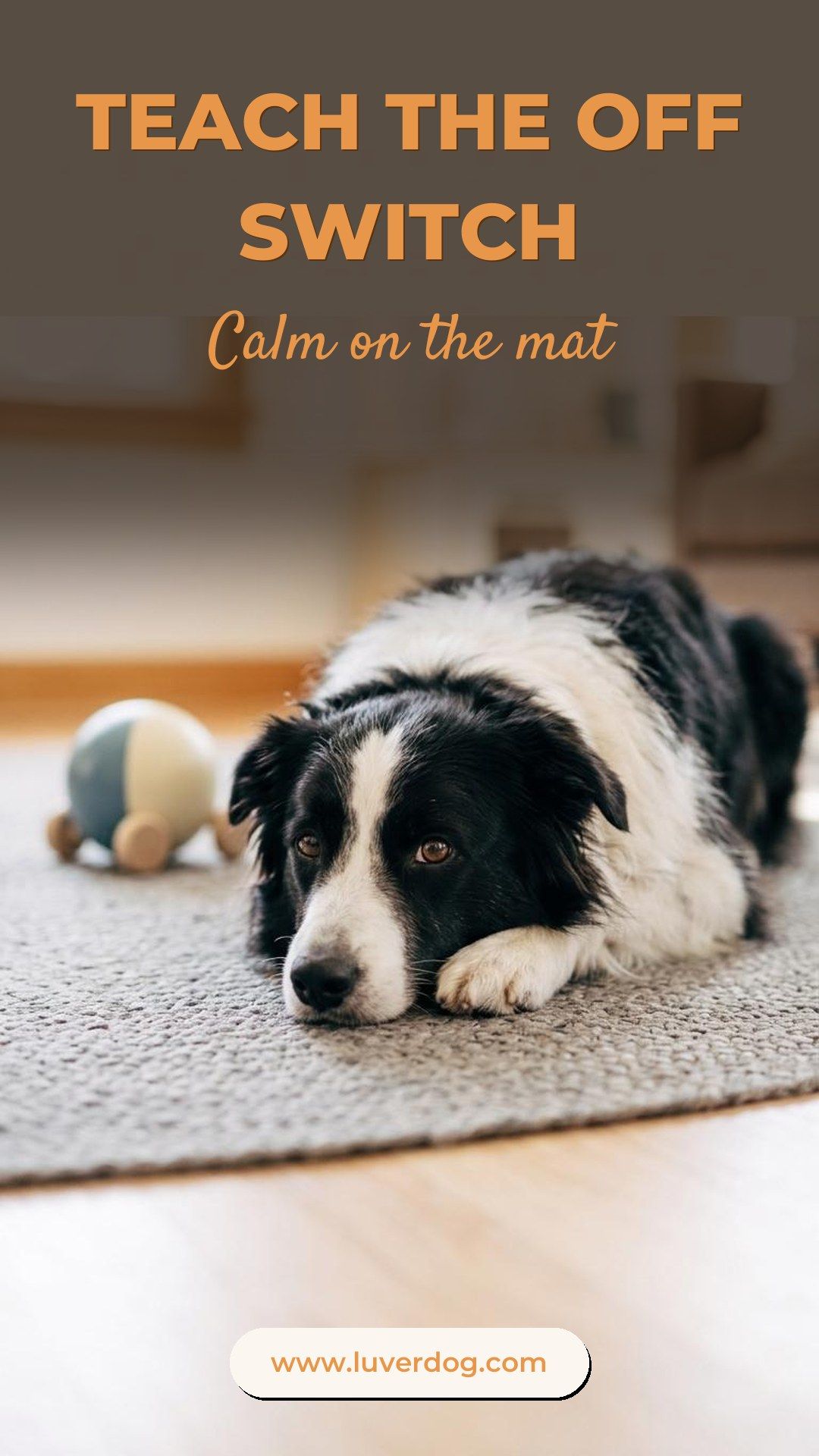
- Reward calm lying down on a mat. Start with seconds. Treat him on the mat for doing nothing. Slowly stretch it.
- Practice after exercise. When he’s tired, he’s most teachable for settling. End every play session with a short mat session.
- Add movement in tiny steps. You walk past. Then you jog on the spot. Then a family member jogs past while he stays on the mat. Tiny wins add up.
- Don’t punish the stare or the crouch. Reward the pause. In my experience punishment often winds the arousal tighter, and a dog who has been scolded for crouching may simply learn to hide it.
- Keep sessions short. Five minutes, twice a day, beats a marathon at the weekend.
When should I get a professional involved?
Get help from a certified trainer (look for CCPDT credentials, or ask your vet for a referral) when:
- He’s chasing cars and hasn’t responded to training
- He’s hurting people or other pets, or the herding turns into real biting
- He can’t settle even after plenty of exercise and mental work
- You’re dreading walks
- The behavior suddenly changed, which is worth a vet visit first to rule out pain or illness
There’s no shame in it. I’d rather pay for a couple of lessons than end up with a dog who gets hurt.
So, can you stop a Border Collie from herding?
No, and you shouldn’t want to. The drive is the dog. What you can do is turn it from a household problem into a skill: manage what he rehearses, pay him for calm, and give him a proper job.
Start small this week. Pick one trigger, maybe the vacuum or the neighbor’s kid on the scooter, and work on it with a mat and a pocket of treats. In a month it’ll be a different dog. Not a quieter dog, honestly. A better-aimed one.


Comments
Post a Comment