
Why Does My Dog Throw Up After Eating? When It's an Emergency
Why Does My Dog Throw Up After Eating? (And When It’s an Emergency)
You hear it from the other room. That wet, gurgling hack, then a splat on the hallway rug, and there’s your dog looking sheepish beside a pile of dinner that was in her stomach ten minutes ago. So why does my dog throw up after eating, and is this a “scrub the rug” moment or a “grab the car keys” moment?
Most of the time it’s the rug. The most common reason is plain old eating too fast, and the AKC notes that undigested food in the vomit can mean a dog simply “snarfed” dinner too quickly. But vomiting is a symptom, not a diagnosis. VCA Animal Hospitals points out it can show up with minor problems like food intolerance and with serious ones like toxins, pancreatitis, or a blockage. I can’t tell you which one your dog has. A vet can.
I’ve lived with dogs for years, including one champion gulper who treated every meal like a race she was losing. I’ve cleaned up plenty of bowls-worth of kibble. This guide covers the usual causes, the one distinction that trips up almost every owner, what you can do in your own lane, and the signs that mean you stop reading and call.
Is my dog vomiting or regurgitating?
This is the question I wish somebody had asked me years ago, because the answer changes what your vet looks for.
The Merck Veterinary Manual describes vomiting as forceful, usually preceded by nausea, drooling, retching, and abdominal contractions. Regurgitation is “a passive motion that does not require effort or contraction of the abdominal muscles.” The regurgitated food tends to be undigested and cylindrical, like a little tube. Merck also says coughing or breathing trouble is more often linked with regurgitation. VCA adds that regurgitation is usually tied to esophageal problems and happens quickly, with no warning signs, often right after eating or drinking.
Here’s how I sort it in my head:
Vomiting is active. Your dog looks queasy first. Lip-licking, drooling, restlessness, then the heaving, then the mess. What comes up may be partly digested food, yellow-green bile, or foam.
Regurgitation is passive. No heaving, no warning. The food just slides back up, often soon after a meal, and it can look like a sausage-shaped lump of kibble that never changed.
Neither is the third bucket. Some dogs cough up food, or gag from an airway irritation. If you’re not sure what you saw, you’re in good company.
Pull out your phone and film the next episode if you can. A ten-second clip beats any description you can give, because dogs are famous for acting perfectly healthy the second they hit the exam room. And if it’s regurgitation that keeps happening, tell your vet that word specifically. It points them toward the esophagus rather than the stomach.
Is my dog just eating too fast?
Usually, yes. This is the benign suspect I’d look at first.
A dog that bolts food swallows a lot of air along with it, and in my experience a stomach full of kibble and air doesn’t always stay put. The AKC notes that undigested food coming back up can mean a dog “snarfed” dinner too quickly. When that’s the cause, I’ve found the mess usually looks like the dinner I just served, barely changed, and shows up within minutes.
Signs it’s a speed problem:
- Your dog finishes in under a minute, and I mean wolfs it, no chewing at all
- Vomit or regurgitated food looks like the same kibble you served
- Your dog acts totally normal afterward, ready to beg for round two
- It happens mostly at mealtimes and mostly when other dogs are around or the bowl is huge
My own gulper did exactly this. Dinner went in, dinner came out onto the kitchen tile, and she’d eat it again if I let her (I never let her). The fix was boring and it worked, which I’ll get to below.
Could exercise right after a meal be the problem?
In my experience, it can contribute. A full stomach and a game of fetch do not mix well, and sloshing around on a loaded belly has brought food back up for my dogs more than once.
There’s also a bigger reason I keep things calm after meals. Bloat (GDV) is a true emergency, and the AKC’s bloat guidance lists fast eating among the things that raise a dog’s risk. So a gulped meal is already on my radar, and letting that settle before any hard play is just a habit I’ve chosen. I leave about an hour of quiet after a big meal. That hour is my own rule, not a vet prescription, so ask your own vet what resting time makes sense for your dog, especially if you have a large, deep-chested breed.
Did a food change cause it?
Sometimes the answer is hiding in the pantry. A new brand, a new protein, a handful of table scraps, a fatty bit of bacon from the weekend.
VCA lists food intolerance or allergy and what it calls “dietary indiscretion” among the minor causes of vomiting. Dietary indiscretion is the polite vet phrase for eating things like scraps, garbage, spoiled food, plants, or the occasional foul-tasting insect. Dogs aren’t picky about their bad decisions.
What I watch for when I suspect the food:
Did anything change? New bag, new treats, new chew, a guest who fed the dog under the table. I jot it down.
Is there a pattern? If the dog throws up after one particular food every time, that’s a clue to bring to your vet. Don’t try to run your own elimination experiment without checking first.
Was the switch gradual? Swapping foods overnight is a classic way to upset a stomach. Your vet or the food’s label can tell you how to transition slowly.
I’m not going to tell you what to feed a dog with a sore tummy, because the right answer depends on the dog. That’s a conversation for your vet.
Is eating grass or other stuff behind it?
Maybe. Plenty of dogs chew a bit of lawn, vomit, and feel fine. I wrote a whole piece on why dogs eat grass, and the short story is that it’s common and usually harmless, though it can overlap with a dog who’s already feeling off.
The more worrying version is when the thing swallowed isn’t grass. Socks, toys, corn cobs, bits of rawhide. VCA describes foreign bodies as indigestible objects that lodge in the stomach or intestines and can cause a blockage. The AKC says foreign material in vomit can signal a possible GI blockage. If you know or suspect your dog ate something she shouldn’t have, don’t wait for dinner to come up and then wonder. Call your vet.
Can pancreatitis make a dog throw up after eating?
It can. This one is on the serious list, and I want you to know it exists without turning you into a panicked internet detective.
VCA’s pancreatitis page says common signs include nausea, vomiting, fever, lethargy, abdominal pain, diarrhea, and reduced appetite. It says a fatty meal may trigger it in some cases, though it often seems to start on its own. Dogs in pain may adopt a “praying position,” rear end up, front legs and head down. VCA states that successful management depends on early diagnosis and prompt medical therapy, and severe cases often need hospitalization.
If your dog threw up after eating something rich and now looks hunched, miserable, or won’t eat, that’s a phone call, not a wait-and-see.
What other illnesses cause vomiting?
A lot. Merck lists digestive disease, kidney or liver failure, pancreatitis, nervous system disorders, and ingestion of irritating substances or poisons. VCA adds infections, inflammatory bowel disease, and cancer to the serious side of its list. That is a scary paragraph to read, and the odds are still on your side that your dog just ate too fast. But it’s the reason a one-off barf is shrugged at while a repeat pattern gets a vet visit.
Merck says vomiting that happens more than once or twice a day, or that comes alongside blood, abdominal pain, weakness, fever, or weight loss, needs a more detailed workup. When in doubt, I’d rather have my vet take a look than talk myself out of the visit.
What can I do to help prevent it?
This is the owner lane. None of it replaces a vet visit, but it’s what I do every day.
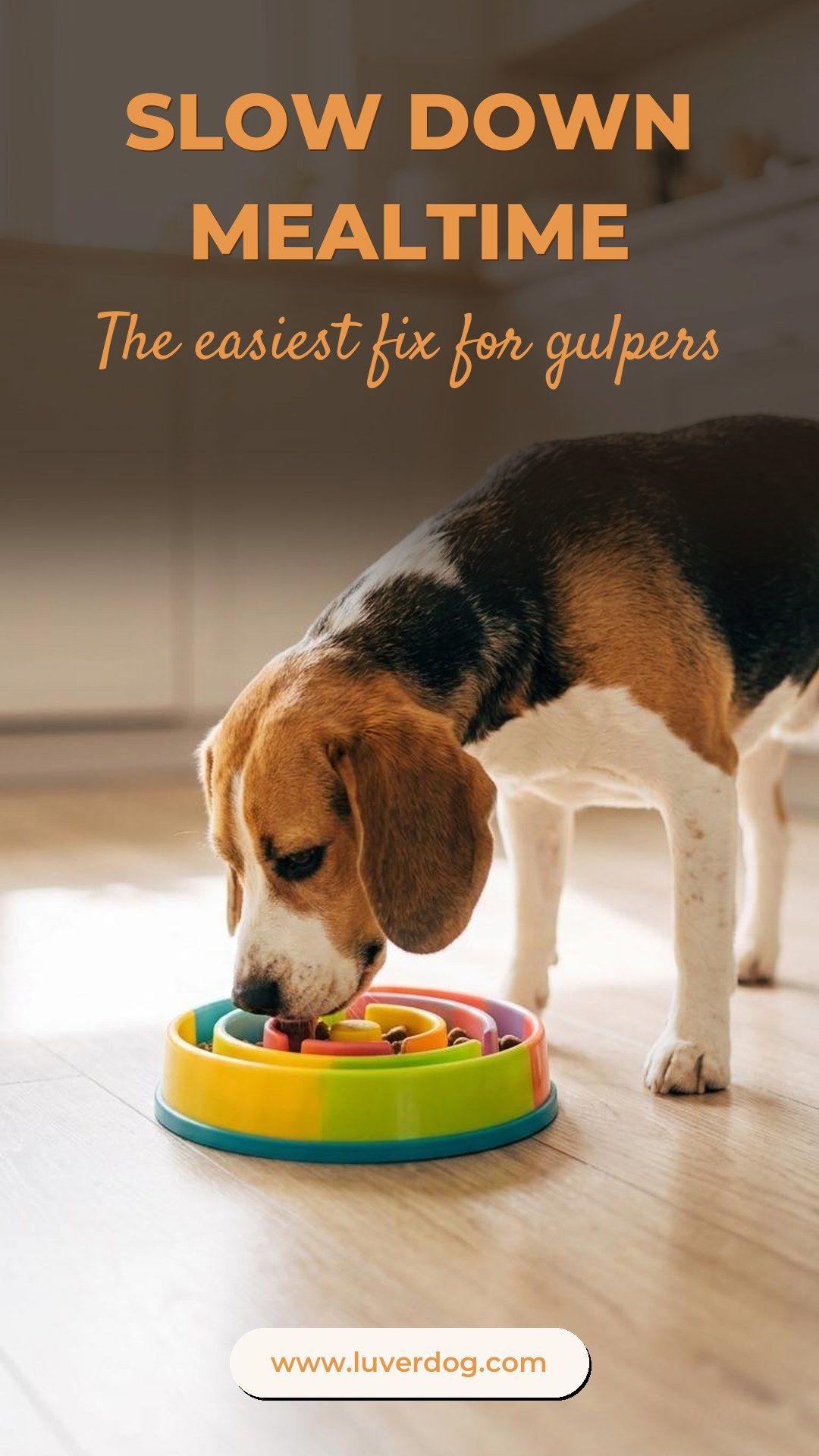
Slow the bowl down. Slow-feeder bowls with ridges, posts, or mazes force a dog to work around the food instead of inhaling it. This is the single change that fixed my gulper. I use a ridged one for her, and a snuffle mat on lazy days.
Feed smaller meals more often. The AKC notes that dogs fed one meal a day are twice as likely to bloat as dogs fed two meals a day. Ask your vet how many meals and how much suits your dog.
Give them space. If you have two dogs, feed them apart. A dog who thinks the other one is about to steal her dinner will inhale it.
Quiet time after meals. No wrestling, no sprints. I keep my dogs calm for an hour or so.
Change foods slowly. Mix a little new into the old over several days, and check with your vet if your dog has any history of stomach trouble.
Lock up the trash and watch the walks. Half of the “mystery vomit” in my life traced back to something snagged off the sidewalk. Leash handling and a firm “leave it” saved me more than once.
Keep a vomit diary. Time, what came up, what the dog ate, how she acted. It sounds fussy. It’s gold at the vet.
When should I see a vet right now?
Stop reading and call. If it’s after hours, call an emergency vet.
Go now if you see any of these:
- Unproductive retching. Your dog heaves and nothing comes up, especially with a swollen, tight, or hard belly. That’s the textbook pattern for bloat (GDV). The AKC lists retching, an enlarged abdomen, drooling, restlessness, and pain when the belly is touched as signs, and says that without treatment a dog will likely go into shock in only an hour or two. Don’t wait for morning.
- Blood in the vomit. Bright red, or dark and gritty like coffee grounds, which the AKC says can indicate digested blood.
- Vomiting that keeps happening. The AKC says to contact your vet if vomiting has continued more than 4 to 6 hours or is frequent or severe. Projectile or repeated bouts count.
- Lethargy, weakness, or collapse. A dog who won’t get up is telling you something.
- Suspected toxin or swallowed object. Chocolate, medications, a sock, a toy. Call your vet or a poison hotline immediately, without waiting for symptoms.
- Vomiting with diarrhea, fever, belly pain, or signs of dehydration. VCA lists these as reasons to get care right away. Merck notes that vomiting can cause dehydration and electrolyte imbalances.
- Puppies, seniors, and dogs with other illnesses. I’m more cautious with these. The AKC says to call if vomiting comes with other ongoing illness, and small or frail dogs can dehydrate fast. This is my own rule of thumb rather than a hard number, so ask your vet what they want to hear about and when.
- Trouble breathing or coughing along with the regurgitation. Merck links coughing and breathing trouble more with regurgitation, and that’s worth a prompt call.
I’d rather be the person who called about a harmless thing than the one who waited about the bad thing. Every vet clinic I’ve used would say the same.
One more point from Merck that surprised me: it says withholding water can worsen dehydration unless the dog is getting supplemental fluids under a vet’s care. So don’t take away the water bowl on your own. Ask what the clinic wants you to do on the phone, since the right plan depends on your dog.
The short version
If your dog throws up right after eating, the most likely reason is eating too fast, and slowing the bowl, splitting meals, and keeping things calm afterward are good habits regardless. Learn the difference between vomiting (active, heaving, bile or partly digested food) and regurgitation (passive, undigested, tube-shaped), and tell your vet which one you saw.
See a vet right away for unproductive retching with a swollen belly, blood, repeated or nonstop vomiting, lethargy, a swallowed object or toxin, diarrhea or dehydration, or any vomiting in a puppy or senior. Diagnosis and treatment belong to your vet, not to me and not to a search bar.
If your dog also hacks and gags a lot, my post on why dogs keep hacking and gagging might help you sort out which noise you’re hearing.
References
- American Kennel Club: Dog Vomiting
- American Kennel Club: Bloat in Dogs
- VCA Animal Hospitals: Vomiting in Dogs
- VCA Animal Hospitals: Pancreatitis in Dogs
- Merck Veterinary Manual: Vomiting in Dogs


Comments
Post a Comment