
Why Does My Dog Lick Me So Much? Causes & When to Worry
Short answer: most of the time it’s affection, habit, or the fact that you taste interesting. Licking is how dogs say hello, ask for things, and check in. Then you giggle and pet them, and the dog files that under “worked, do it again.”

So why does my dog lick me so much on some days and barely at all on others? Usually because of what’s going on around the lick: a salty post-run arm, a lonely afternoon, a dinner plate. Once in a while, though, the licking is the symptom. A dog who can’t stop is telling you something, and that part is worth a phone call to your vet.
I’m an owner, not a vet or a behaviorist. I’ll walk you through what I’ve seen over the years, what the AKC and other vet-reviewed sources say, and where I’d stop guessing and book an appointment.
Why does my dog lick me?
Here are the everyday reasons, roughly from most common to least. Most dogs are doing two or three of these at once.
- Affection and comfort. The AKC says licking can be a sign of affection and can give a dog a feeling of security and comfort. Think of it as a dog hug. Mine does it in the evening when I finally sit down, which feels about right.
- You taste good. Human skin is a little salty, especially after a workout or a hot day, and the AKC lists salt as a reason dogs go for your arms and legs. Same goes for the hands that just touched dinner. Nobody’s flattered by this one, but it explains the post-gardening lick-fest.
- It’s a greeting. The AKC also describes licking as a ritualized greeting for many dogs, a habit that traces back to how puppies lick adult dogs’ mouths to ask for food. Walk in the door after work and you’ll get the full welcome-home treatment.
- Grooming and pack instinct. Mother dogs lick their puppies clean, and dogs in the same household groom each other. When your dog works over your hand or forearm, you’ve been counted as family. It’s a compliment, even a slobbery one.
- Communication and appeasement. Some dogs lick to say “I’m friendly, nothing to see here.” The AKC mentions a theory that more submissive dogs lick a more confident member of the pack, though I’d treat that as one possibility and not a rule. Watch the body: a soft, wiggly dog is just being nice, while a stiff dog with flattened ears licking at your chin is nervous.
- Attention. Dogs aren’t dumb. If licking gets you to look up from your phone, say their name, and scratch their chest, you’ve rewarded it.
- You keep reacting. This is the big one, and it’s mostly our fault. Laugh, squeal, push the dog away, say “stop it, stop it” in a sing-song voice, and every bit of that is attention. Even the push is contact. Behavior that gets paid off gets repeated, and a lick that earns a response is paid off. I’ve watched this play out in my own house. The more the family giggled, the longer the licking lasted.
That last point matters later, when we get to stopping it.
Is it okay to let my dog lick me?
For most healthy people, a few licks on intact skin are fine, and plenty of us live with that daily. A little common sense helps, though.
- Skip open skin. Cuts, scrapes, a fresh tattoo, a healing blister. Move your hand away and let the skin close first.
- Think twice about your face and mouth. I know, I know. The dog loves your face. I’d still rather keep the licks to arms and hands and wash up afterward, and many people feel the same.
- Be more careful if anyone in the house has a weakened immune system. That includes people on certain medications or in treatment for a serious illness, plus very young children and older relatives. If that’s your household, ask your own doctor how strict to be. I can’t answer that for you.
- Wash your hands after a licking session, and before you eat.
- Keep your dog’s health on track. Regular vet visits, parasite prevention, and dental care all matter more than whether you allow licks. Your vet knows your dog and can tell you what’s reasonable.
None of that is a reason to push your dog off the couch. It’s just the short list of times I move my hand.
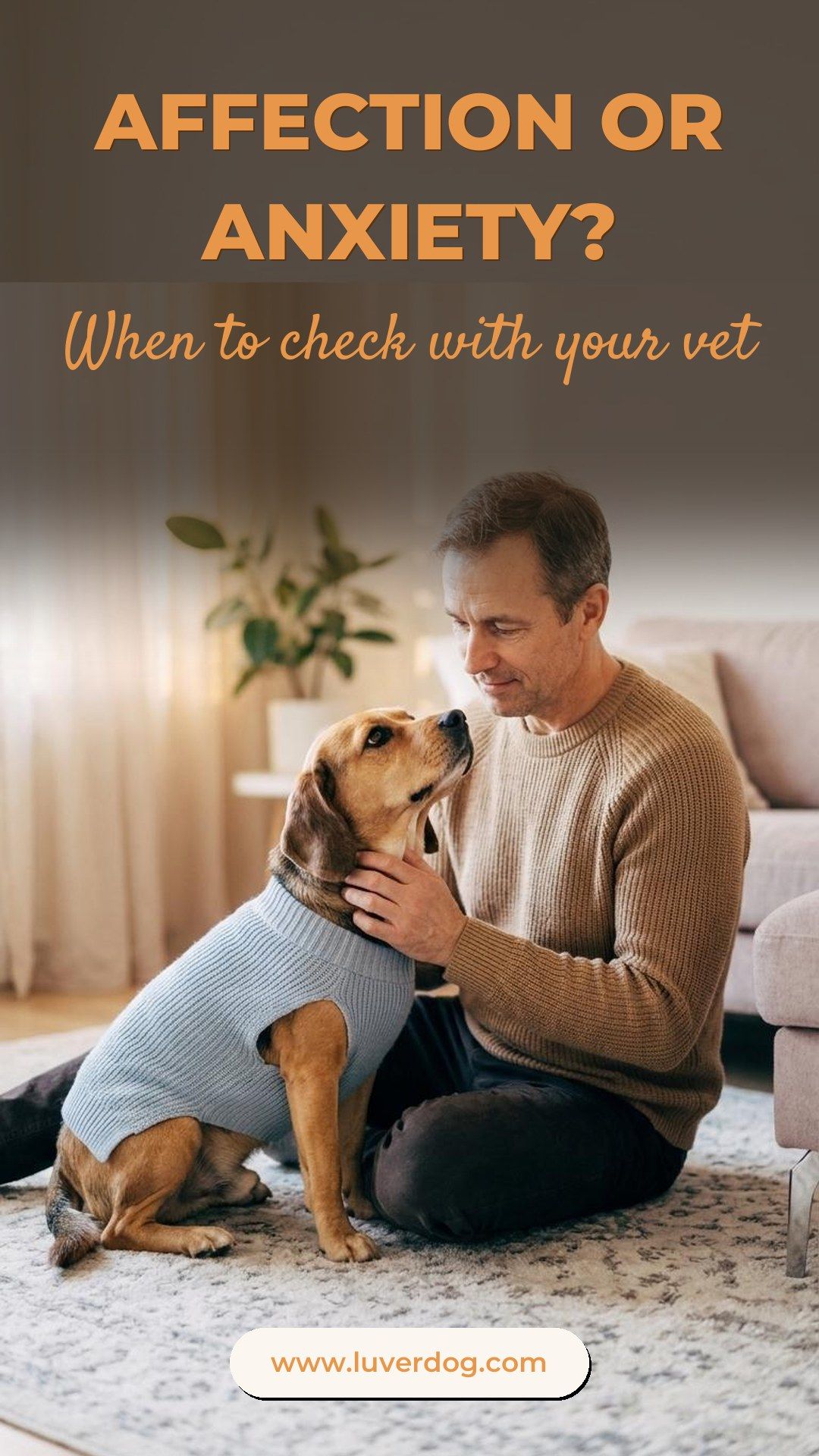
Dog licking: affection or anxiety?
This is the question underneath the whole article, and it’s the one I wish somebody had told me to ask sooner. Dog licking affection or anxiety? You can often tell by three things.
- Does it stop? Affectionate licking comes in bursts. Your dog licks, you pet, the dog flops over. Licking that’s hard to interrupt, or that picks right back up after you redirect it, deserves more attention.
- What does the rest of the body say? Loose body, soft eyes, wagging: relaxed. Lip licking, yawning, pacing, panting, or a tucked tail alongside it: stressed. (I made a similar point about eye contact in why does my dog stare at me, because the same logic applies. The face and body tell you whether it’s a love note or a worry.)
- Is it aimed at you, or at everything? A dog who licks you as part of saying hello is communicating. A dog who licks the couch, the carpet, the air, and his own legs for long stretches is doing something else.
If the answer to any of these makes you uneasy, move to the next section. Not because something is surely wrong, but because “it’s a lot” is exactly the signal vets want to hear about.
When is licking a sign of something wrong?
Think of this as a checklist for when “he’s just a licker” stops being the right explanation. None of these is a diagnosis. Your vet makes that call.
- It’s compulsive. VCA describes a compulsive disorder as a behavior repeated often enough to be disruptive to a dog’s daily routine. The practical version: you can’t easily interrupt it, it takes over when he should be eating or playing, or it leaves sores. VCA says repetitive licking can cause sores, and licking of the lower legs can turn into acral lick dermatitis that damages skin and the tissue underneath. Per VCA, this kind of licking should be evaluated by a vet. They also say punishing it can make fear and frustration worse, so don’t scold.
- Anxiety is behind it. The same VCA page ties compulsive behavior to chronic stress and conflict, and notes that it can start as self-soothing. Clues I’d watch for: licking that spikes when you leave, during storms, or when the house is tense; pacing; whining; yawning and lip-smacking. If this sounds like your dog, a vet or a veterinary behaviorist is the right person to sort out the cause and plan.
- Itchy skin or allergies. The AKC lists allergies and other health problems among the reasons for excessive licking. VCA likewise names skin disorders and food sensitivities that cause an itch. If the licking is mostly at his own paws, belly, or flanks, with redness, chewing, or scooting, it’s worth an appointment. Our why do dogs lick their paws post goes through the allergy, anxiety, and habit overlap in detail.
- Nausea or a sore mouth. A veterinary trade piece in dvm360 says nausea is a common cause of excessive licking of surfaces, and it lists dental or oral pain among the possibilities. So if your dog is suddenly licking the floor, the air, or you, and you also see drooling, gulping, or skipped meals, call your vet. We cover that side in why does my dog lick the floor.
- Pain somewhere. VCA lists things like arthritis and old fractures as conditions that can start repetitive licking. A dog who fixates on one leg or joint is worth a closer look, especially if he also limps, stiffens up, or flinches.
- A senior dog with new habits. The dvm360 piece notes that dogs over 11 can have cognitive dysfunction, which is diagnosed only after other causes are ruled out. I’m not saying licking means dementia. I’m saying that a senior dog who suddenly starts a new repetitive habit, especially with night pacing, confusion, or accidents, should see the vet before anyone assumes it’s just old age.
A word on what you can do before the appointment. Film the behavior. Ten or fifteen minutes of video is more useful to most vets than my rambling description. Note when it happens, what’s going on around it, and anything new in his food, meds, or routine.
When should I see a vet now?
Most licking is not an emergency. These are the exceptions that make me pick up the phone the same day.
- Licking that’s broken the skin, leaving raw, bleeding, or oozing patches
- Licking paired with vomiting, retching, drooling, or refusing food
- A sudden change in an adult dog who’s never licked much
- Licking along with limping, yelping, or guarding a body part
- A senior dog who seems disoriented or distressed, not just clingy
- Anything your gut says is off. You know this dog.
If it’s after hours and you can’t tell whether it’s serious, an emergency vet or a phone triage line is a fair call to make. Don’t wait for the perfect symptom.
How do I stop my dog from licking me so much?
If you’ve ruled out a medical cause with your vet and the licking is just a habit that bugs you, here’s what I’d do. For how to stop dog licking, think gentle and boring, not stern.
- Stop feeding the habit. No laughing, no pushing, no talking, no eye contact. When the licking starts, calmly stand up or turn away, wait a few seconds, and go back to what you were doing. Be dull. It feels silly for a day or two and then works better than anything else I tried.
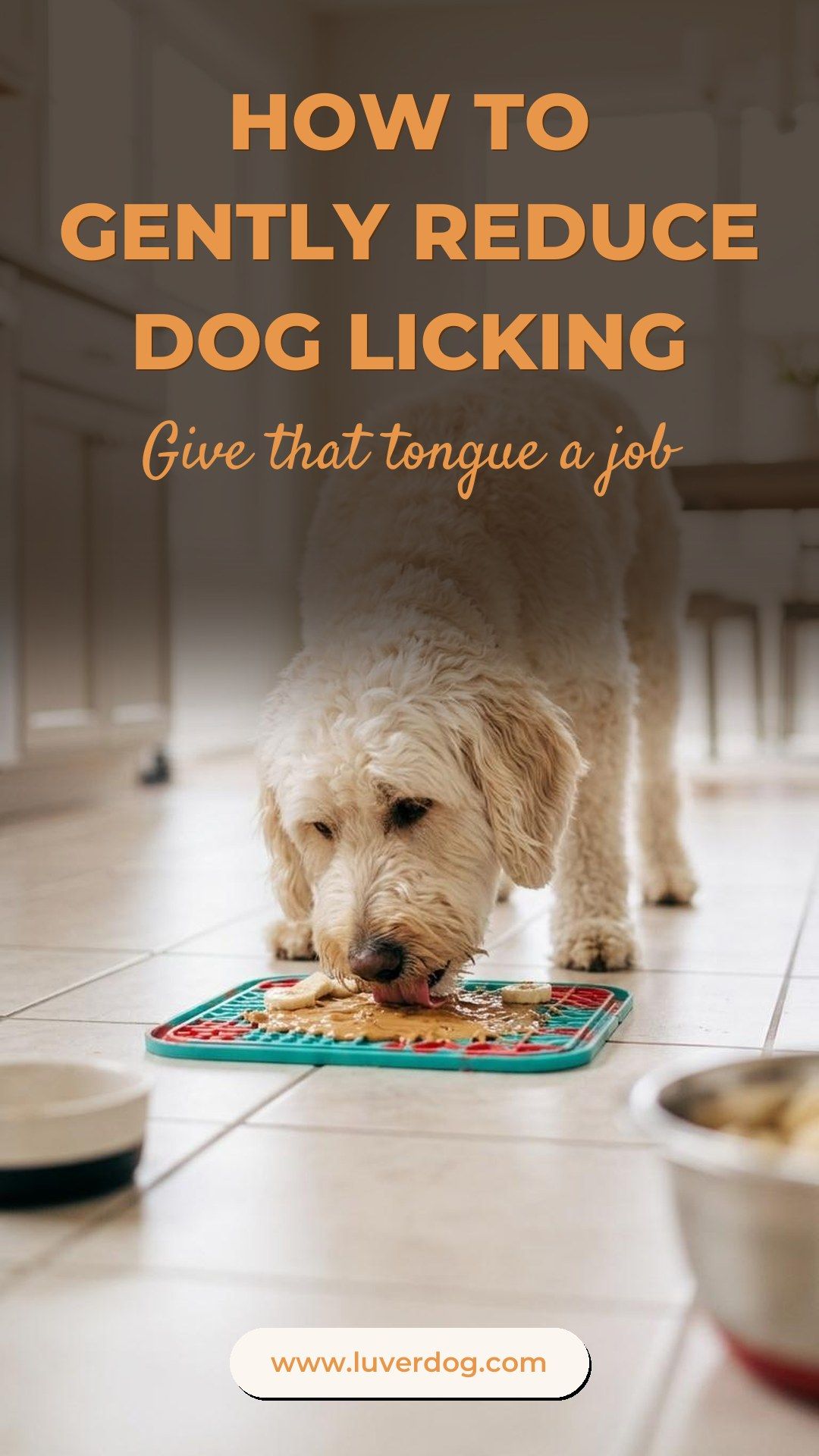
- Redirect to something lickable. The AKC suggests swapping in an activity that’s incompatible with licking, like a puzzle toy, ball play, or a trick. A lick mat smeared with peanut butter or yogurt is a good one, since it gives the urge somewhere harmless to go. (Check the label for xylitol before you hand over any peanut butter. If you’re not sure what’s safe for your own dog, ask your vet.)
- Reward the calm version. Four paws on the floor, relaxed body, no licking? Treat. Quietly. You’re teaching him that calm earns the good stuff and licking gets nothing.
- Teach a replacement. A “sit” often interrupts the licking on its own, as the AKC points out. Ask for it, reward it, then give attention. Another cue he can do instead of licking works the same way.
- Give him an outlet. The AKC also mentions plenty of attention and exercise, since pent-up energy can make over-licking worse. A sniffy walk, a snuffle mat, a game of tug. A tired dog licks less.
- Be consistent as a household. One person giggling undoes the work of three. Everybody gets the same script.
- Don’t punish. Yelling or swatting adds stress, and stress is a common reason dogs lick in the first place.
If you’ve done this for a few weeks and the licking is the same or worse, or you notice the stress signs from earlier, that’s the point to bring in your vet or a certified behaviorist. It’s not a failure. Some dogs need more than a lick mat and good manners.
So, is my dog’s licking normal?
Probably. A dog who licks you in the evening, after a workout, or when you walk in the door is just being a dog who loves you and likes your salty arms.
I’d start paying closer attention when the licking is constant, hard to interrupt, aimed at surfaces as much as people, or comes with changes in eating, energy, or mood. That’s when I stop asking “why is he like this?” and start asking my vet.
Mostly, enjoy it. Wipe your hands, keep the licks off the cuts, and don’t laugh so much if you want fewer of them. That last part I’m still working on myself.


Comments
Post a Comment