
Why Does My Dog Eat Dirt?
Why Does My Dog Eat Dirt?
You turn your back for ten seconds in the garden, and there’s your dog with a muzzle full of flowerbed, looking weirdly pleased with herself. So, why does my dog eat dirt, and should you worry? Usually it’s boredom, stress, or plain curiosity, and occasionally it’s anemia or a stomach problem, so a dog who does it a lot deserves a vet check.
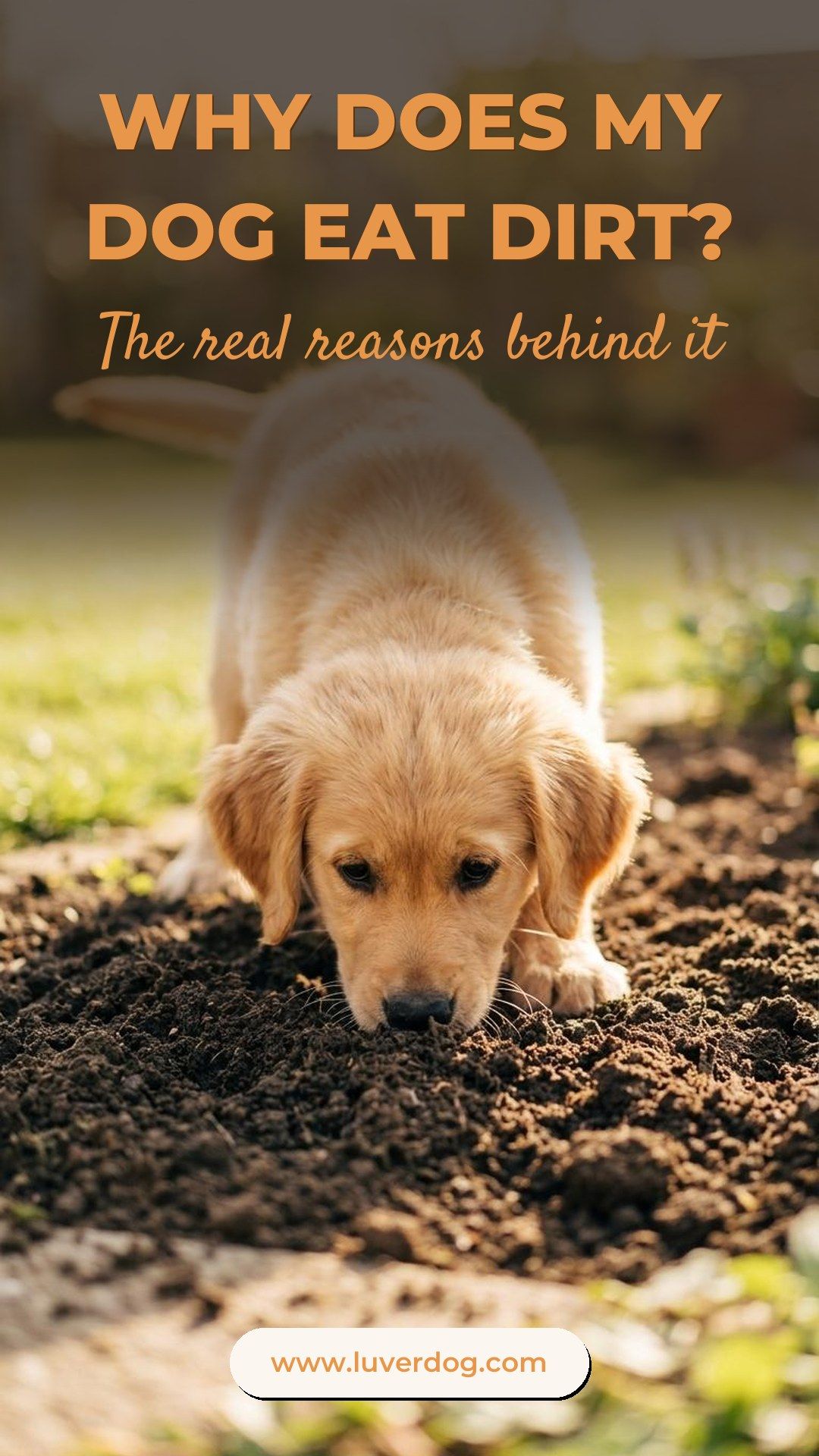
Vets list nutritional, behavioral, and physical reasons, and your dog might be doing it for more than one. Or the dirt just smells amazing. (I have a hard time arguing with that one. Wet earth after rain is a pretty great smell.)
I’ve had dogs who treated the vegetable patch like a buffet and dogs who wouldn’t touch it, and I’ve learned which version needs a vet visit. If you’re asking why is my dog eating dirt all of a sudden, this guide walks through the causes, the risks, what to try at home, and the signs that mean you should stop guessing and call someone with a stethoscope.
Understanding why dogs eat dirt
Eating dirt has a name, geophagia, and it’s a form of pica, which just means eating things that aren’t food. These dog pica causes are roughly in the order I’d think about them.
It tastes or smells good. Boring answer, often the right one. Soil is full of interesting smells, from worms to old compost to whatever the neighbor’s dog left behind. Whole Dog Journal puts it plainly: there is no single reason why dogs eat dirt, and a dog simply finding it tasty is one of the common theories.
A dog with nothing to do will make a hobby out of anything. If yard time is “open the door and hope for the best,” dirt becomes entertainment, and too little exercise or enrichment is a recognised trigger.
Stress or anxiety. Some dogs eat dirt the way some people bite their nails. Whole Dog Journal notes that eating can release feel-good endorphins, which may be why it becomes a repeat habit in an anxious or understimulated dog.
The popular theory is that dogs eat soil to get sodium, iron, or calcium. It sounds logical. But the same Whole Dog Journal piece calls the research fairly inconclusive. An underfed dog or one on a poor diet is still worth a conversation with your vet.
Dogs sometimes eat dirt (and grass) when their gut feels off, possibly to make themselves throw up. PetMD lists gastritis among the medical reasons.
Then there’s anemia and other medical problems, which get their own section next.
Can anemia make a dog eat dirt?
Maybe, and it’s why vets take a frequent dirt habit seriously. If you’ve seen the phrase dog eating soil anemia in your searches, here’s what it means: anemia is too few healthy red blood cells, and PetMD notes it can come from hookworms, fleas, ticks, cancer, immune-mediated disease, or bleeding disorders.
Does the anemia cause the dirt eating, or the other way around? Nobody knows for sure. The “dogs are hunting for iron” idea is a theory, not a proven fact. What vets agree on is that a dog with a sudden dirt habit deserves a check.
Pale gums are the sign PetMD flags. Lift your dog’s lip and look: healthy gums are usually pink. If yours look pale or white, call your vet.
Other medical causes on the list include digestive disease, parasites, and a liver problem called a portosystemic shunt. You can’t diagnose any of them from the couch.
Which dogs are most likely to eat dirt
Any dog can, but some are more prone. I’ll admit I used to wave it off. Years ago I had a young dog who dug the same corner by the fence every evening around six, and I told myself it was a phase because she was a pup and pups do daft things. It was a phase, sort of, but only after I’d started taking her for a proper run before dinner and giving her something to chew while I cooked. The corner stayed empty after that. Looking back, nothing was wrong with her gums or her appetite, and she was just a bright dog with an evening gap in her schedule. I got lucky that it was boredom. If it had been something else, I’d have lost weeks pretending it was a phase.
Puppies. They explore with their mouths. Plenty grow out of it. Not all, though.
Bored, under-exercised adults. Think of a smart, active breed with a lot of unused brainpower. A Border Collie who’s had a lazy week will find something to do, and it might involve your tomato plants.
Anxious dogs, the ones who pace, lick their paws raw, or panic when you leave. Dirt eating can sit right alongside those habits.
Dogs on a poor diet, or underfed ones, where minerals may be part of the picture.
Senior dogs. PetMD points to cognitive decline, reduced nutrient absorption, and medication side effects as possible causes in older dogs. A senior who has never touched dirt and suddenly can’t stop is a vet call, not a shrug.
Copycats. Per the AKC’s vet, Dr. Laurie Coger, dogs learn from other dogs in the house. One dirt eater can turn into two.
Types of dirt behavior (and what each one tells you)
Not all dirt behavior is the same, and it helps to figure out which one you’re looking at.
The casual nibble. A bit of soil on a walk, then back to normal. PetMD says eating small amounts of dirt once or twice will likely not harm your dog.
The obsessive digger-and-eater: same spot, same time, over and over. It looks like boredom or compulsion, and it tends to stick around if you ignore it.
The sudden new habit. Never did it, now does it daily. The AKC’s vet is blunt: any new, unnatural behavior like dirt eating should be acted on quickly.
Dirt plus other stuff, like rocks, fabric, or sticks. That’s pica proper, and blockages make it riskier.
Rolling in dirt. So, why does my dog roll in dirt? The usual explanations are scent, scratching an itch, or cooling off, and it isn’t pica.
What the risks actually are
I don’t want to scare you, but the dirt itself isn’t the main problem. It’s what’s in it.
Parasites. PetMD lists Giardia, hookworms, roundworms, and whipworms as things soil can carry.
Pesticides and fertilizer. The AKC warns these can reach toxic levels if enough is ingested. If your dog ate dirt from a treated lawn, PetMD says to call the Pet Poison Helpline (855-764-7661, a fee applies) right away. Don’t wait for symptoms.
Impaction and blockages. The AKC says an impaction can need surgery, and rocks and sticks hiding in soil add obstruction and puncture risks.
Damaged teeth. The AKC lists dental wear and damage, especially from rocks in the dirt.
Mulch, especially cocoa bean mulch. Heads up: it’s toxic to dogs. Poison Control says it contains theobromine and caffeine, just like chocolate, and can cause vomiting, diarrhea, a rapid heartbeat, tremors, and seizures. If your dog has eaten any, call your vet. Other mulches and potting mixes can carry additives too, so ask your vet about anything in your own garden.

Tips for stopping the habit
Try these once your vet has ruled out a medical cause. Otherwise you may be treating the wrong thing.
- Book the vet check first. Whole Dog Journal recommends a physical exam, bloodwork, and a fecal test when a dog does this consistently.
- Add more exercise. A tired dog digs less.
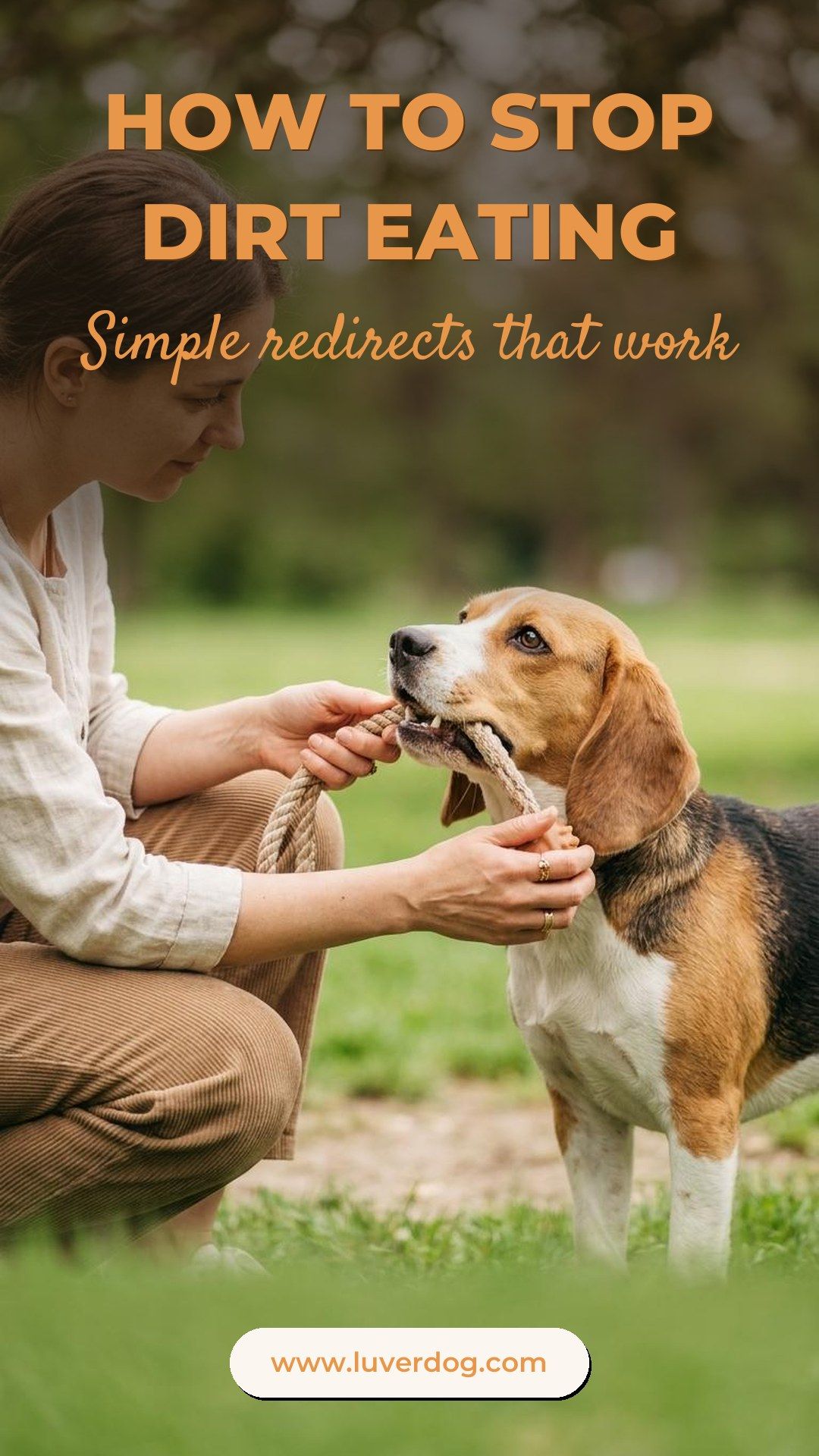
- Give the mouth a job. Try a Kong stuffed and frozen, a snuffle mat, or a puzzle feeder.
- Block the hotspot. The AKC notes that denying access to favorite dirt-eating areas may be needed. A bit of fencing around the flowerbed is cheaper than a vet bill.
- Redirect, don’t yell. A cheerful “leave it” and a treat beats a shouting match, and shouting makes some dogs do it faster when you’re not looking.
- Keep the leash short near problem areas on walks.
- Talk to your vet about the food. If nutrition might be the cause, the AKC suggests talking to your vet about diet.
When dirt eating probably isn’t a big deal
A single mouthful on a walk. A puppy mouthing at the garden. A dog who eats a bit of grass now and then, which Whole Dog Journal says is normal for omnivores. A dog with clean bloodwork and a stable habit that you can manage with a fence and a toy.
If that’s your dog, relax a little.
When to talk to your vet
Call your vet if you notice any of these. PetMD’s list of signs to watch for covers most of them.
- Your dog eats dirt frequently, suddenly, or in large amounts.
- Pale gums.
- Lethargy or a drop in appetite.
- Straining to poop, or stool changes.
- Vomiting multiple times in 24 hours.
- You think your dog swallowed rocks, sticks, or treated soil. Call your vet or an emergency clinic right away.
Your vet may suggest tests, a diet change, or a behavior plan. I’m not a vet. I’m just someone who’s learned not to skip the check.
Watching the pattern, not the single bite
One dirty muzzle doesn’t mean much. A pattern does. Watch how often it happens, how much, and whether anything else has changed, like energy, appetite, or poop.
If it’s a bored dog, more exercise and a fence usually help. If it’s anything more, your vet has the tools to find out.
References
- AKC — Why Does My Dog Eat Dirt?
- PetMD — Why Do Dogs Eat Dirt?
- Whole Dog Journal — Why Do Dogs Eat Dirt?
- Dogster — Why Do Dogs Roll in Dirt?
- Poison Control — Cocoa Bean Mulch Can Poison Dogs


Comments
Post a Comment